14 min
The Passion of Joan of Arc
圣女贞德蒙难记
1928
Carl Theodor Dreyer
France · Historical / Drama / Silent film · 110 min
In 1431 a young peasant girl is tried for heresy by an ecclesiastical court in Rouen. Dreyer condensed the real trial transcripts into a single day and shot almost all of it in close-up — the most famous face in cinema, and a torture that never touches the body.
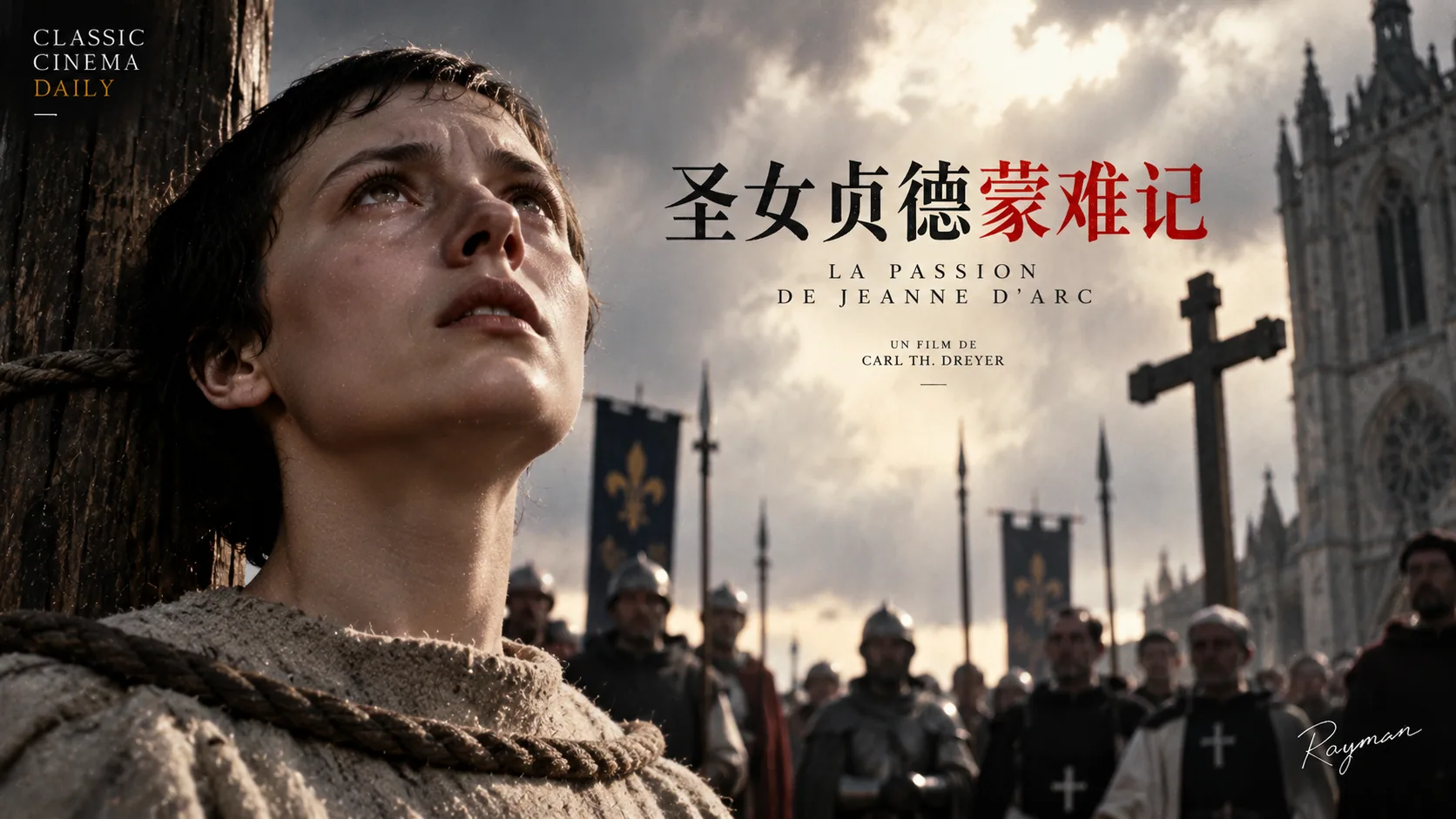
01Why this film today
Both of today's films are built around something that cannot be seen.
In The Passion of Joan of Arc it is a voice. Joan says she hears the voice of God. The screenplay is drawn almost entirely from the actual record of her 1431 trial at Rouen, and the single thing that record contains most of is the judges asking her, over and over, the same question: what did you hear? What did the voice say? They want her to hand the voice over, so it can become evidence a court can process.
Dreyer knew the voice could not be photographed. So he photographed a face. He described his aim as a hymn to the triumph of the soul over life — and a soul cannot be put on film. A face can.
In The Spirit of the Beehive it is a monster. In 1940, with the Spanish Civil War just over, a mobile cinema arrives at an isolated village on the Castilian plateau and screens the 1931 American horror film Frankenstein. Ana, six or seven years old, asks her sister afterwards: why did he kill the girl, and why did they kill him? Her sister tells her that everything in a film is a lie, that the monster did not die, that he is like a spirit, and that if she closes her eyes and calls him she can talk to him.
Ana spends the rest of the film looking for him. And Erice never gives her, or us, a single marker to separate what is happening from what she is imagining.
Neither film explains its own mystery. The court asks dozens of times what Joan heard, and her answer is never the one it wants; Ana asks why the monster killed the girl, and nobody answers her. One film rebuilds a trial from a transcript nearly five hundred years old; the other rebuilds a village through a child's eyes. Forty-five years apart — one silent, black and white, in close-up; one in colour, in honey-coloured light, in widescreen.
The second reason is the archive itself.
It now holds 20 films across 18 countries or territories and 10 decades. But Spain is at zero — and The Spirit of the Beehive is, as of 2022, the only film by a Spanish or Latin American director on Sight & Sound's list of the 100 greatest films of all time. Silent cinema is likewise at one film (Metropolis, 1927), and the 1920s at one. Today Spain goes from 0 to 1 and silent cinema from 1 to 2.
The third reason is internal, and it runs along two opposite lines.
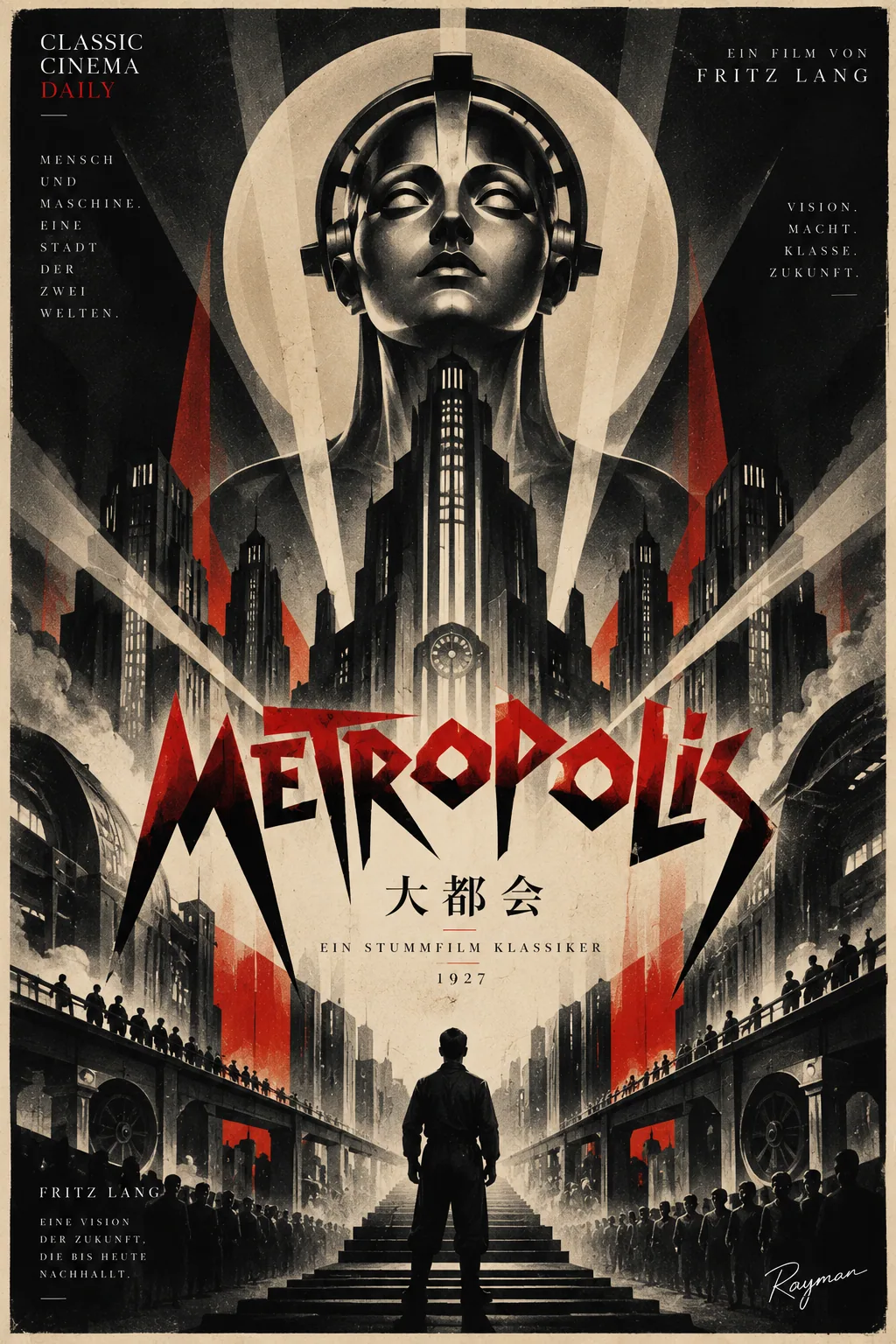
The silent line. The 1927 slot already holds Metropolis. Two silent films from the same decade going in completely opposite directions: Lang bets everything on the set, Dreyer bets everything on the face. Metropolis spends its budget on a city; The Passion of Joan of Arc spends seven million francs on an octagonal concrete Rouen castle with ten-centimetre walls — and then the camera refuses to pull back. There is no establishing shot anywhere in the film.
The record line. The archive already holds Close-Up (1990), also a film built on real material — but it has the real people re-enact themselves. The Passion of Joan of Arc takes a trial transcript nearly five hundred years old and sends an actress into it. The same idea from opposite ends: bring the real person back to perform, or walk the performer into the real record.
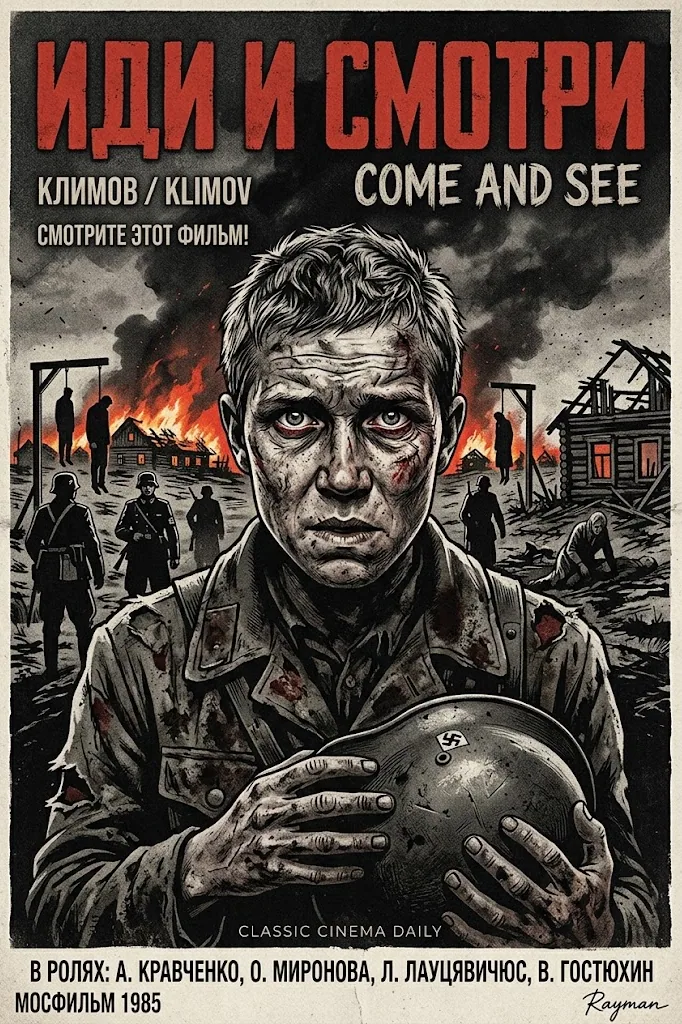
The Spirit of the Beehive connects to Come and See (1985). The archive already has one film that puts a child into the empty ground left by war — that one is the battlefield in Belarus; this one is Spain five years after, in a village where nothing happens, which is worse. It also pairs with Spring in a Small Town: neither film shows the war. Both show only the silence it left inside a house.
One last reason is a date: in two days, on 8 October, The Spirit of the Beehive marks 53 years since its Spanish release.
02Film details
- Chinese title
- 圣女贞德蒙难记
- English title
- The Passion of Joan of Arc
- Director
- Carl Theodor Dreyer / 卡尔·西奥多·德莱叶
- Year
- 1928
- Country
- France / 法国
- Language
- Silent (French intertitles)
- Genre
- Historical / Drama / Silent film / 历史 / 剧情 / 默片
- Runtime
- 110 min
03About the film
故事发生在 1431 年的鲁昂。
贞德在贡比涅附近被俘,落到勃艮第—英格兰联盟手里,随后被带到鲁昂,由一批效忠英格兰的法国神职人员以异端罪名审判。审她的人要的并不是她的命,而是一句话:只要她承认自己听见的「声音」不是来自上帝,她自称的使命就作废,查理七世在兰斯的加冕也就失去依据。
所以她被反复地问同一个问题。她的回答从头到尾没有变。
法庭换了几种办法:一名神父在狱中向不识字的她宣读一封伪造的、声称来自法国国王查理七世的信;带她去看刑具;最后以火刑相威胁。影片就在这几种办法之间推进,直到最后那个结局——那个结局是历史,不是剧透。
(这里不再往下说。)
04Why it is a classic
A film made out of a transcript
The Passion of Joan of Arc (French title La Passion de Jeanne d'Arc) is a French silent film of 1928, directed by the Dane Carl Theodor Dreyer, written by Dreyer with Joseph Delteil.
Its source is not a novel but the actual record of Joan's 1431 trial. Dreyer researched it for more than eighteen months and condensed 29 interrogations spread across 18 months into a single day on screen.
He described his aim in one sentence: "I wanted to interpret a hymn to the triumph of the soul over life." That sentence explains every formal choice in the film. A soul cannot be photographed, so he aimed the camera at the only place where a soul is visible: the face.
Performance: a stage actress in front of a camera, once
Joan is played by Renée Jeanne Falconetti (1892–1946), then 35 and already a celebrated Paris stage actress working mainly in light comedy and musicals. Dreyer found her in an amateur production of La Garçonne.
It was her second and last film role. After The Passion of Joan of Arc she never returned to a camera.
Dreyer forbade make-up and used the newly developed panchromatic film so that skin would be recorded naturally. He asked Falconetti to strip all expression from her face, so that the audience would have to read what was being held down.
The best-known stories about the shoot — Dreyer making her kneel on stone, shooting the same set-up again and again until she was close to collapse — were repeated by Roger Ebert. But Dreyer's biographers Jean and Dale Drum state that these accounts rest on rumour alone, and that "there is no evidence that Dreyer could be called a sadist." Their witnesses describe something else: Dreyer and Falconetti watching rushes of a single scene seven or eight times together until a few feet of film were exactly right; later she could play a scene from his explanation alone, with no rehearsal.
It is worth remembering that the most famous story about this film is also the one with the weakest evidence.
Camera and set: holding the audience against a face
The cinematographer was Rudolph Maté; editing was by Marguerite Beaugé with Dreyer; the production designers were Hermann Warm (previously a designer on The Cabinet of Dr. Caligari) and Jean Hugo.
The budget of roughly seven million francs went into an enormous octagonal concrete set standing in for medieval Rouen Castle — outer walls, houses, an execution courtyard and a cathedral, with walls ten centimetres thick. The whole set was painted pink, because pink photographed as the right grey in black and white and separated the walls from the white sky.
The film's best-known formal trait is that it almost never uses an establishing shot. It gives the audience no wide view of where we are or who is present; from the first shot it pushes people into close-up. Dreyer also used heavy low angles to make the judges loom and distort — the crew dug holes in the floor for them, which earned him the nickname "Carl Gruyère."
History: a film burned, then found in a closet
The film's distribution history is a story in itself.
- 6 December 1928: a fire at the UFA studios in Berlin destroyed the original negative. Dreyer could only reassemble a version from alternate and unused takes.
- 1933: a 61-minute version appeared, narrated by the radio star David Ross, with no intertitles.
- 1952: Joseph-Marie Lo Duca found material in the Gaumont vaults and reworked it heavily, adding baroque music and replacing intertitles with narration. Dreyer objected to it.
- 1981: a janitor clearing a closet at Dikemark Hospital in Asker, Norway — a mental institution outside Oslo — found three film canisters. They went to the Norwegian Film Institute and sat there for three years before anyone opened them. They turned out to be Dreyer's original cut, made before government and church censorship — still in their original 1928 packaging, addressed to the hospital's then director, Harald Arnesen.
The most complete version of this film came back from a closet in a psychiatric hospital fifty-three years after its premiere.
Music: it has dozens of scores
Silent films have no fixed soundtrack, so the score history of Joan of Arc is nearly as long as its version history. The 1928 Paris score was by Léo Pouget and Victor Alix; Dreyer was never fully satisfied with any score he heard. Later composers include Ole Schmidt (1983), Richard Einhorn (the 1994 oratorio Voices of Light, included on the Criterion Collection release as an optional track) and Cat Power (live accompaniment, 1999).
Where it stands
- Sight & Sound: 7th in 1952 and 1972; 10th (critics) and 6th (directors) in 1992; 9th (critics) in 2012; joint 21st (critics) and joint 30th (directors) in 2022 — tied with Man with a Movie Camera as the highest-ranked silent film on the directors' list.
- 4th on the 1958 Brussels World's Fair "Brussels 12" list.
- Named the greatest silent film ever made by The Guardian in 2010.
- 23rd on the BBC's 2018 list of the 100 greatest foreign-language films; 64th on Cahiers du cinéma's 2008 list of 100 greatest films.
- Added to the Vatican's list of films in 1995, under "Religion."
- Entered the US public domain in 2024 as a 1928 work.
- Rotten Tomatoes: 98% from 63 reviews, average 9.40/10.
Ebert wrote the line that gets quoted most: "You cannot know the history of silent film unless you know the face of Renée Maria Falconetti." Pauline Kael called her performance "may be the finest performance ever recorded on film."
One note from the time: Variety's review at the premiere called it "a deadly tiresome picture." A film now routinely placed among the greatest ever made was a disaster in the trade press.
05What to notice
全片没有一个建立镜头。德莱叶不给观众任何交代环境的全景,从第一个镜头起就是特写。摄影机几乎不后退,审判者的脸被推到占据整个画面——观众被放在和贞德一样的位置上,无处可退。
布景被漆成粉色。为模拟中世纪鲁昂城堡,剧组搭建了一座巨大的八角形混凝土布景(墙厚十厘米),然后把整座布景刷成粉色。原因很实际:在当时的黑白胶片上,粉色会呈现恰当的灰,与白色天空拉开层次。
德莱叶的绰号是「Carl Gruyère」。为了用低角度拍出审判者的压迫感,他让人在地板上挖坑,把摄影机放进坑里。剧组因此拿瑞士奶酪给他起了这个绰号。
演员表里有两个意想不到的名字。超现实主义理论家 Antonin Artaud 饰演鲁昂教长 Jean Massieu;而后来以《Boudu Saved from Drowning》闻名的 Michel Simon 是法官之一。德莱叶禁止全体演员化妆。
剧本是压缩过的真实笔录。德莱叶研究贞德超过一年半,把原本横跨 18 个月、共 29 次审讯的过程压缩成银幕上的一天。剧本用的是审判的原始笔录,不是改编小说。
「德莱叶虐待演员」是传闻,不是事实。伊伯特复述过「让她跪在石头上、反复重拍到崩溃」的说法,但德莱叶的传记作者 Jean 与 Dale Drum 指出这些故事只基于传闻,「没有任何证据表明德莱叶可以被称作施虐者」。目击者描述的是另一种关系:两人会一起把一场戏的样片看七八遍,直到挑出几英尺完全正确的片段。
结局用一张字幕卡收尾。火焰升起时,人群中的妇女在哭泣,一名男子高喊 "vous avez brûlé une sainte"(你们烧死了一位圣人);军队准备镇压骚乱。影片最后以字幕说明:火焰保护了她的灵魂,使它升入天堂。
片长有两个数字。按 20 帧/秒放映是 110 分钟,按 24 帧/秒放映是 82 分钟——默片时代没有统一帧率,这个差别本身就是一个需要留意的观影变量。
06Before you watch
它是什么。110 分钟(20 帧/秒)/82 分钟(24 帧/秒),黑白,默片,法语字幕卡,1928 年法国出品。导演 Carl Theodor Dreyer,摄影 Rudolph Maté,美术 Hermann Warm 与 Jean Hugo。
版本:这一项比平时重要。请优先选择 1981 年在挪威 Dikemark 医院发现的原始剪辑的修复版(Criterion Collection 有发行)。要避开两个版本:1933 年那个 61 分钟、配 David Ross 旁白、没有字幕卡的版本;以及 1952 年 Lo Duca 在 Gaumont 素材基础上改动、用旁白替换字幕卡的版本——德莱叶本人反对后者。
配乐:没有「正确」答案。默片没有固定音轨,所以这部影片有几十种配乐。最常见的是 Richard Einhorn 1994 年的清唱剧《Voices of Light》;也有完全无配乐的放映。如果你想看「原始状态」,静音观看同样成立——德莱叶本人对听过的每一版配乐都不完全满意。
节奏:它不是情节电影。全片是同一场审判的推进,靠的是脸、剪辑的节奏与字幕卡,而不是事件的堆叠。它很短(82–110 分钟),但信息密度集中在表演上,建议一次看完,不要分段。
强度:内容残酷,画面不残酷。题材是酷刑威胁与火刑处死,但德莱叶几乎什么都不直接拍出来——没有血腥画面,没有特写伤口。真正让人不适的是脸和声音。这一点对不习惯默片的观众反而是友好的。
人名。Renée Jeanne Falconetti(贞德)、Eugène Silvain(主教 Pierre Cauchon)、Antonin Artaud(Jean Massieu)、Michel Simon(法官之一)。
一句话建议。如果你想理解「默片能做到什么」,这是终点之一;如果你只是想看一部 82 分钟、没有一句对白、却能让你屏住呼吸的电影,也是这一部。
07In one line
Dreyer set out to film a hymn to the triumph of the soul over life. A soul cannot be photographed — so he pushed the whole film into a single face.