12 min
Pather Panchali
大地之歌
1955
Satyajit Ray
India · Drama / Coming-of-age / Neorealism · 125 min
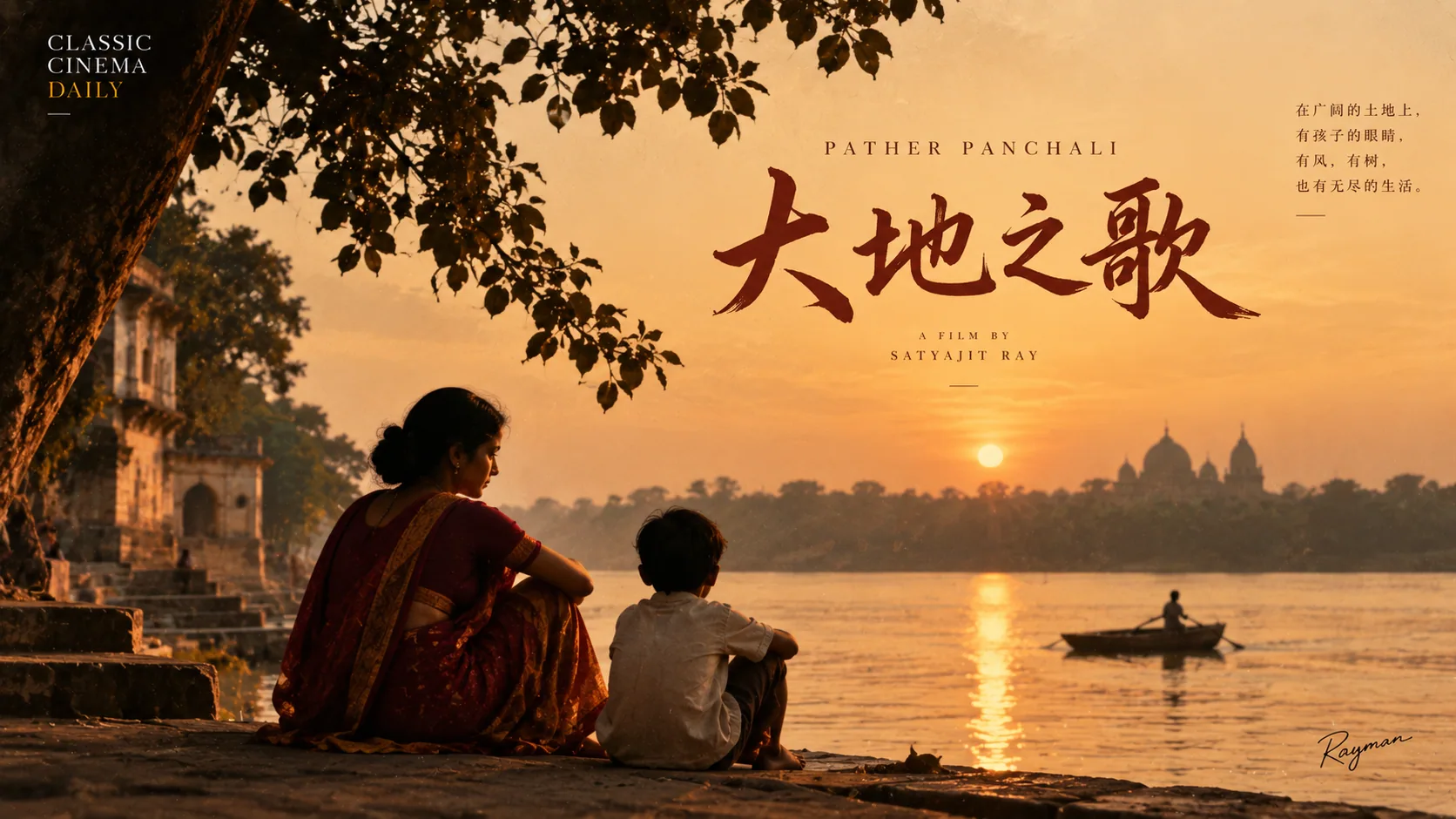
A village called Nischindipur, in Bengal. Harihar writes letters and recites scripture for a little money and dreams of better. His wife Sarbajaya holds the household together one day at a time. Their daughter Durga steals fruit from a neighbour's garden in the monsoon. Their small son Apu sees a train for the first time. Shot on and off over nearly three years, Satyajit Ray's first film turns a family's ordinary days into cinema.
01Why this film today
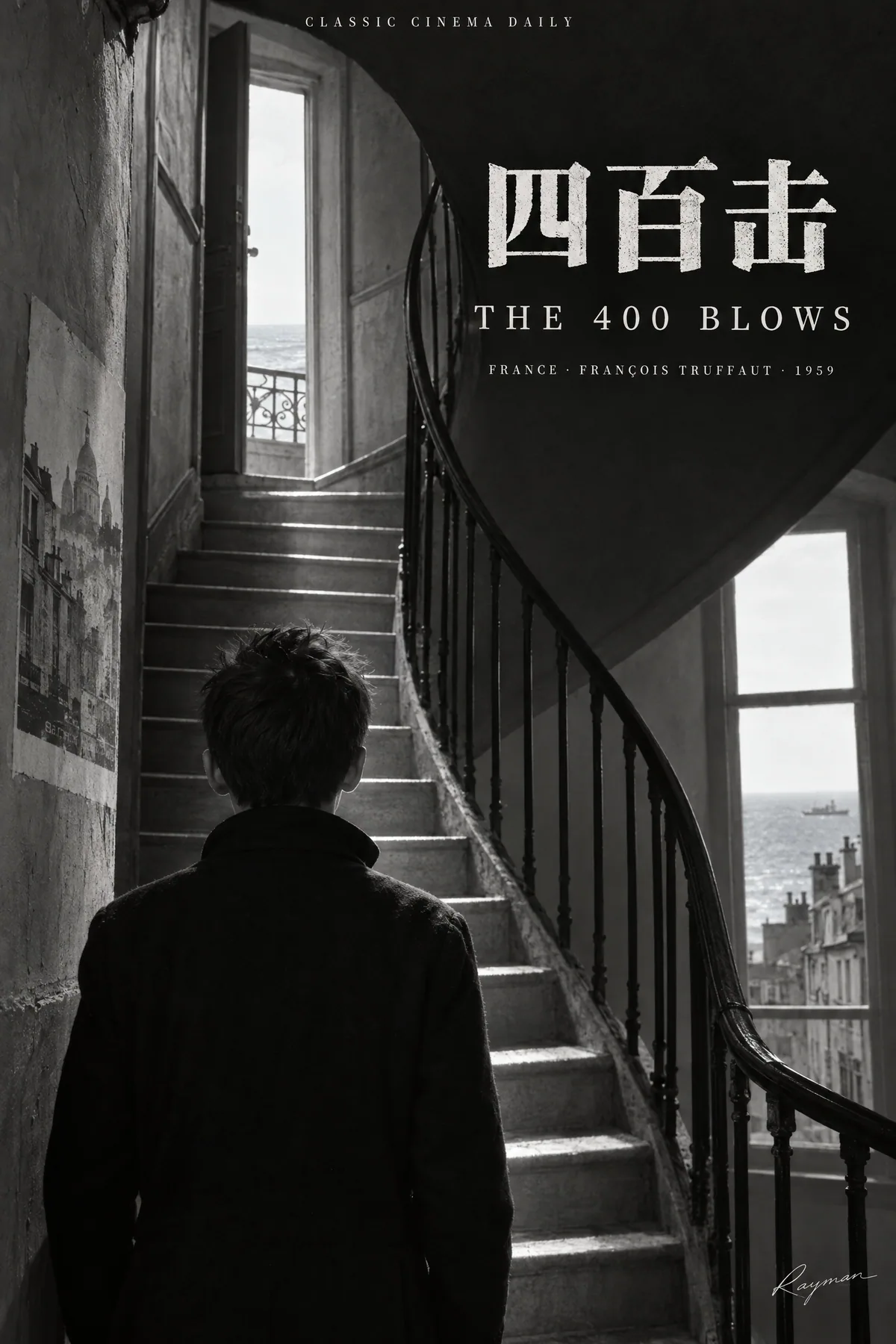
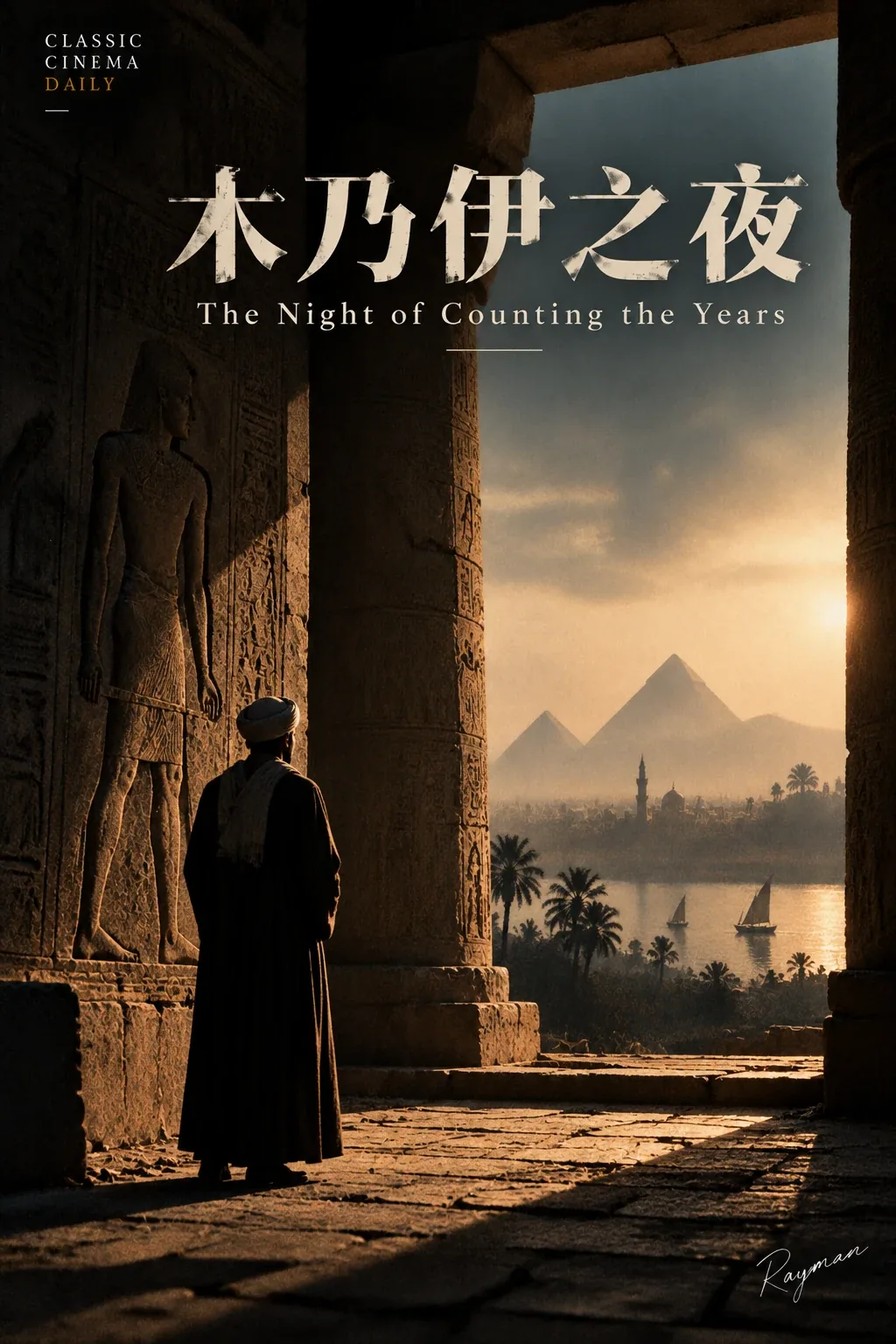
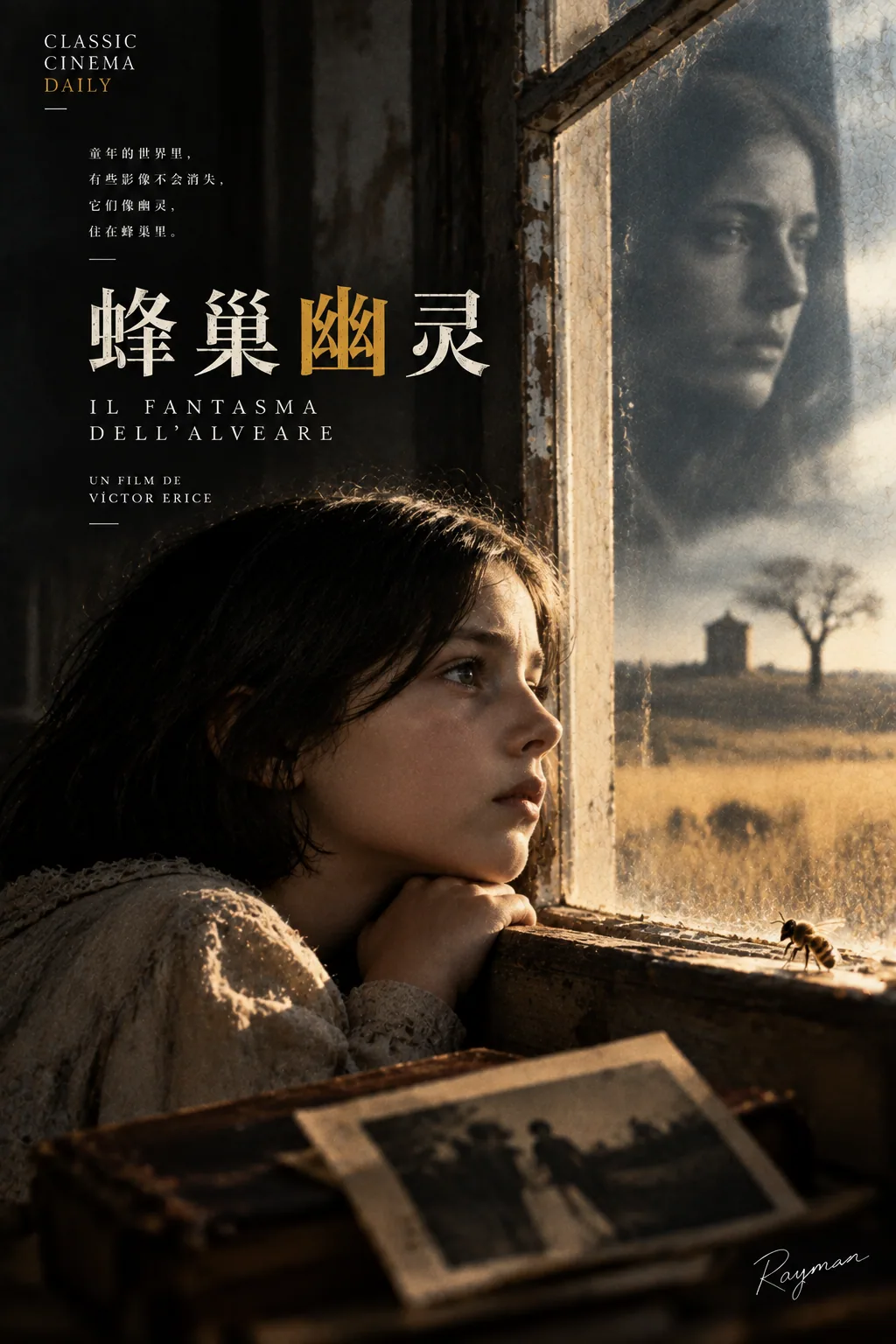
The archive now holds Germany 1927, Italy 1948, Japan 1954, Sweden 1957, France 1960, Britain and America 1968, America 1972, Iran 1990, Hong Kong 2000 and South Korea 2019. India is empty. So is the whole of South Asia.
But the reason for choosing this one today is more specific than filling a gap on the map.
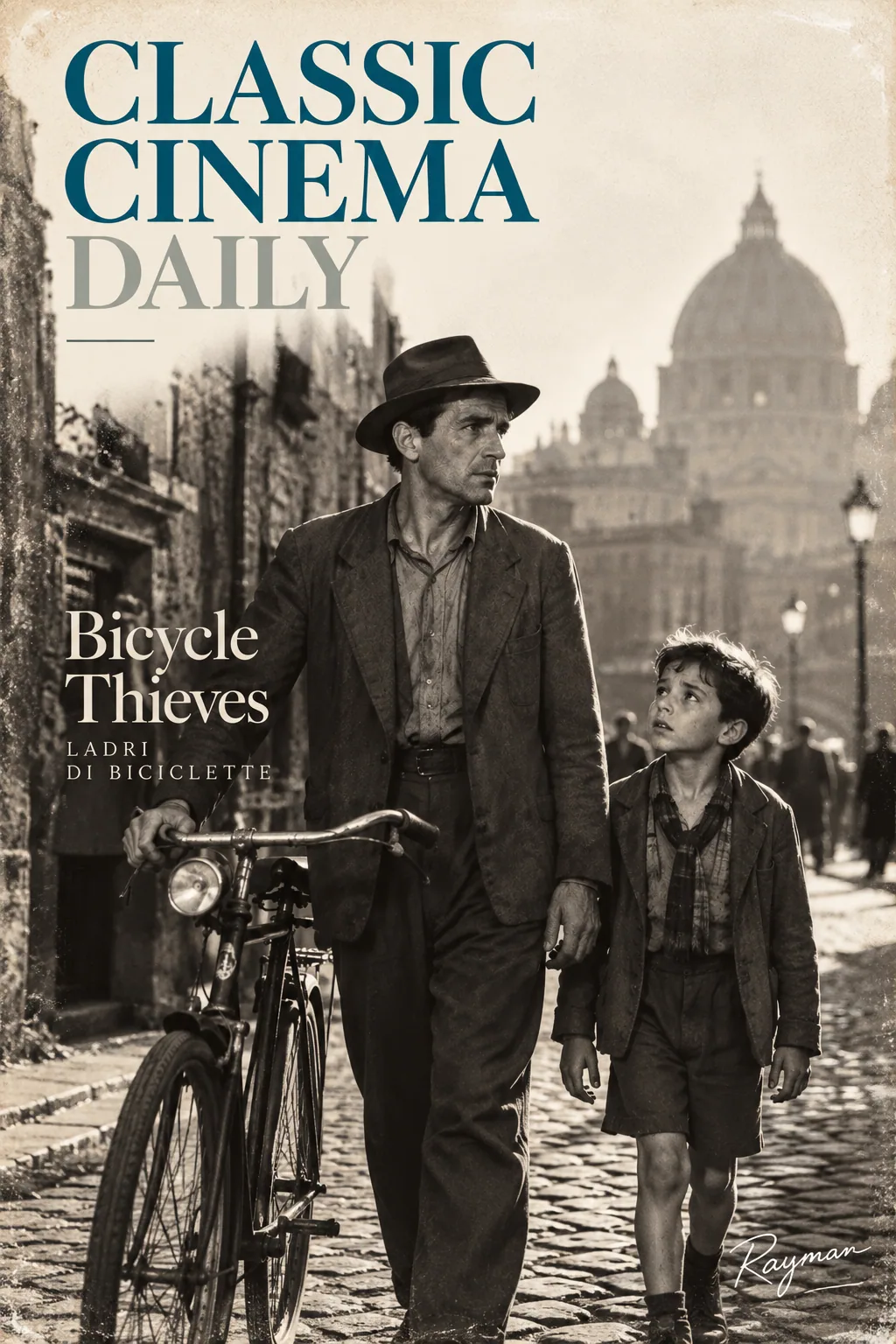
In 1948 Vittorio De Sica made Bicycle Thieves — a film already in the archive, added on 26 September 2026. In 1950 a Bengali graphic designer at the Calcutta advertising agency D.J. Keymer was sent to the firm's London office for six months. During those six months he saw roughly a hundred films. One of them was Bicycle Thieves. Years later, in a lecture, he said that walking out of that cinema he decided to become a filmmaker.
That man was Satyajit Ray. Five years later he made Pather Panchali.
So today's pick is not an arbitrary gap being plugged. It is Italian neorealism bearing fruit in India — a film already in the archive directly caused another one to exist. Seen side by side, they are one of the clearest causal chains in film history.
It pairs with today's other selection, Come and See: 1955 against 1985, thirty years apart; one following a family through a Bengali monsoon, one following a boy across scorched Belarus. They have more in common than they look — both use a child as their vantage point, both rely on non-professional or first-time performers, and both were very nearly never made. The first was shot on and off for nearly three years; the second was blocked by Soviet film censors for eight.
02Film details
- Chinese title
- 大地之歌
- English title
- Pather Panchali
- Director
- Satyajit Ray / 萨蒂亚吉特·雷伊
- Year
- 1955
- Country
- India / 印度
- Language
- Bengali
- Genre
- Drama / Coming-of-age / Neorealism / 剧情 / 成长 / 新现实主义
- Runtime
- 125 min
03About the film
孟加拉,1920 年代前后的一个村庄,名字叫 Nischindipur。
Harihar Roy 是村里的穷文书,替人写信、抄文书、偶尔唱诵经文换一点钱。他读诗,做梦,也常常不在家。妻子 Sarbajaya 在家里把日子一寸一寸撑住——米缸见底、邻居冷眼、亲戚的施舍,她都记着。女儿 Durga 是个在雨季里光着脚乱跑的孩子,喜欢跟邻居家的小孩玩,也因此常被母亲责骂。小儿子 Apu 还小,他第一次走出村子,是为了去看火车。
家里还有一位老祖母 Indir Thakrun。她住在这里但不受欢迎,靠邻居偶尔给的一点吃食活着,喜欢跟孩子讲从前的故事。
影片讲的是这个家庭在几个季节里的事。没有大事件,没有反派,没有转折点。它的重量全部来自日常:一次邻居的指控,一场没下成的雨,一件借来的东西,一封信带来的一点希望。
(这里不再往下说。这个故事有一半的力量来自不知道接下来会发生什么。)
04Why it is a classic
One man's first film
Satyajit Ray was born in Calcutta in 1921 and died in 1992. Before films he was a graphic designer at the advertising agency D.J. Keymer and designed book covers and illustrations for Signet Press in Calcutta; in 1947 he helped found the Calcutta Film Society. In 1949, when Jean Renoir came to Calcutta to shoot The River, Ray helped him scout locations in the countryside. When Ray told Renoir he wanted to film Pather Panchali, Renoir told him to go and do it.
The source is the novel of the same name by the Bengali writer Bibhutibhushan Bandyopadhyay, serialised from 1928 and published as a book in 1929. Ray had illustrated the book in the 1940s; he began writing the screenplay in earnest after returning from London in 1950.
This was his first feature. The budget came to roughly 70,000–150,000 rupees, about US$15,000–31,500 at the time.
Three years of not finishing
Shooting began on 27 October 1952. No producer would back it: no stars, no songs, no action, and nobody believed such a film could sell. The money ran out repeatedly. Ray borrowed, kept taking design work, mortgaged his life insurance and sold his record collection; the production manager Anil Chowdhury persuaded Ray's wife Bijoya to pawn her jewellery. The shoot halted for nearly a year and afterwards proceeded only intermittently. The singer Kishore Kumar donated 5,000 rupees to keep it alive.
In 1954 Monroe Wheeler of the Museum of Modern Art in New York heard about the project in Calcutta, saw the footage, judged it excellent and urged Ray to finish. Six months later, when the American director John Huston passed through India, Wheeler sent him to look at the rushes; Huston called it the work of a great filmmaker. MoMA then put in additional money. Finally the Government of West Bengal, on the instruction of Chief Minister Bidhan Chandra Roy, approved a loan paid out in instalments — according to Ray, the officials believed they were funding a rural-development documentary and filed the loan under 'road improvement', which happens to echo the 'path' in the title.
From first day of shooting to completion: nearly three years. Ray later said three miracles saved the film: 'Apu's voice did not break, Durga did not grow up, and Indir Thakrun did not die.'
That is not just a joke. Because the shoot spanned three years, Subir Banerjee as Apu and Uma Dasgupta as the older Durga could have grown into different people at any moment; and Chunibala Devi, who played the old aunt Indir, was already in her eighties — a retired stage actress from the silent era whom Ray found in Pike-Para Lane in Calcutta. She died not long after filming. In 1966 the Manila Film Festival awarded her a posthumous Best Actress prize.
Subrata Mitra's first time
The cinematographer Subrata Mitra had never shot a feature. He was a friend of Ray's who had studied science and had been experimenting with photography alongside him. His means were austere: quantities of natural light, a low, level camera placed at or below eye height. To light interiors without heavy lamps he bounced sunlight indoors with mirrors; the rain scenes, the nights and the lamplit rooms all rely on available light and reflectors he built himself.
The result was an image that Indian cinema had not produced before: not stage lighting, not mythological sets, but skin and mud and cloth under direct sun and direct rain. The ponds, reeds, fields and railway tracks that recur throughout were all real locations — the village of Boral near Calcutta.
Ravi Shankar in one night
The score is by Ravi Shankar, at that point not yet the internationally famous sitar virtuoso he became. By his own account he had seen only about half of the rough cut when he began composing, but he already knew the story; most of the music was written overnight and the recording session ran about eleven hours. The main theme came from a folk tune he hummed to Ray, normally played on a bamboo flute. Two further sitar solos are based on raga Desh, traditionally associated with rain, and the melancholy raga Todi; the scene in which Harihar learns of his daughter's death uses a passage based on raga Patdeep played on the tar shehnai by Dakshina Mohan Tagore. Subrata Mitra himself played sitar on parts of the score.
There is not a single 'number' in the film. Within the Indian film industry of 1955, that was a decisive choice.
Script and structure
Ray cut a great deal of the novel and rearranged the order. In the book Indir Thakrun's death comes early, beside the village shrine, with adults present; the film has the two children discover her body themselves. In the book Durga's death has no stated cause; the film attributes it to the monsoon — she falls ill after playing in the rain. The closing image of the family leaving the village by bullock cart was added: the novel has no such ending. Apu finds the necklace Durga always denied stealing and throws it into the pond.
The film's most famous passage, the children running to see the train, does not exist in the novel — there the two children try and neither sees it. Ray invented it. Critics broadly treat it as the key to the whole film: it is not about plot but about the accumulation of wonder, the moment Apu first realises there is a world beyond the village.
Reception and influence
The film had its world premiere on 3 May 1955 during an Indian exhibition at MoMA, under the title The Story of Apu and Durga and with no subtitles. It opened in Calcutta at the Basusree cinema on 26 August 1955 to a lukewarm reception, then filled the house by word of mouth within a fortnight and later ran seven weeks at a second cinema. In 1958 it was a substantial success in the United States, running eight months at the Fifth Avenue Playhouse in New York.
At Cannes in 1956 it competed for the Palme d'Or and won the 'Best Human Document' award plus an OCIC Special Mention. It took India's National Film Award for Best Feature Film the same year, Japan's Kinema Junpo award in 1966, and was nominated for Best Film at the BAFTAs in 1958.
In the Sight & Sound polls: 11th in 1962, 6th in 1992, 22nd in 2002; in 2012 42nd among critics and 48th among directors; in 2022 35th among critics and 22nd among directors. A 2002 BFI users' poll named it the best Indian film ever made. The BBC's 2018 list of the 100 greatest foreign-language films placed it 15th. Rotten Tomatoes records 97% from 69 reviews, averaging 9.3/10.
Akira Kurosawa listed it 37th among his hundred favourite films. Christopher Nolan has called it one of the best films ever made.
It was the first independent Indian film to win major international critical attention, and one of the earliest examples of Indian Parallel Cinema — a tradition built on social realism and authenticity rather than the rules of the Bombay industry.
Restoration
In 2013 the Criterion Collection and the Academy Film Archive began restoring the original negatives of the Apu Trilogy. Those negatives had been badly damaged in a London fire in 1993 and then sat in storage for twenty years. The material went to the L'Immagine Ritrovata laboratory in Bologna, where manual restoration and scanning took more than a thousand hours; in the end about 40% of the Pather Panchali negative was recovered. The restoration premiered at MoMA on 4 May 2015 — more than sixty years after the film's world premiere in the same building.
05What to notice
「去看火车」是电影加的,小说里没有。原著里两个孩子确实尝试过,但都没有看到火车。Ray 把这场戏加进来,评论界普遍认为它是理解全片的钥匙:它拍的不是情节,是「惊奇」的累积过程,是阿普第一次意识到村子之外还有别的世界。
三件奇迹。因为拍摄跨越将近三年,Ray 说:「一、Apu 的嗓音没有变声;二、Durga 没有长大;三、Indir Thakrun 没有去世。」这不是玩笑——三位演员任何一位发生变化,这部片子就得作废。
一夜写完的配乐。Ravi Shankar 作曲前只看过大约一半粗剪,大部分配乐一夜写成,录制约十一个小时。主题旋律来自他哼给 Ray 的一段民谣。摄影指导 Subrata Mitra 本人在部分配乐里弹了西塔琴。
政府以为自己在资助一部农村纪录片。西孟加拉邦政府的分期贷款被登记为「道路改善」,恰好暗合片名里的「路」字。政府后来以约 6 万美元买下影片,到 1980 年已经获利约 70 万美元。
老祖母的演员来自默片时代。Chunibala Devi 是 Ray 在加尔各答 Pike-Para Lane 找到的退休舞台演员,当时已八十多岁。她拍完不久后去世;1966 年马尼拉电影节把最佳女演员奖追授给了她——距离影片上映已经十一年。
摄影指导的第一部电影,靠镜子把阳光搬进屋。Subrata Mitra 此前没拍过长片。为了不用大灯拍室内,他用镜子把室外阳光反射进屋;低角度平视、自然光、长镜头,构成了后来被反复模仿的「印度新现实主义」影像语法。
06Before you watch
它是什么。125 分钟,孟加拉语,黑白,1955 年印度出品,Ray 的第一部剧情长片,阿普三部曲的第一部。原著是 Bibhutibhushan Bandyopadhyay 1929 年的小说。
不要期待的东西。没有中心情节,没有反派,没有高潮。它不朝某一个危机推进,而是让季节和日常自己累积。前二十分钟你可能会觉得什么都没发生——那是设计,不是失误。
人名。Apu(小儿子)、Durga(姐姐)、Harihar(父亲)、Sarbajaya(母亲)、Indir Thakrun(老祖母)。
和《Bicycle Thieves》的区别。两部都是新现实主义,但 De Sica 的片子朝一个明确的危机推进;Ray 不这么做。这是看这部片时最值得留意的一处对照。
版本。如果可能,看 2015 年 Criterion 的修复版。原始底片在 1993 年伦敦一场火灾中受损,修复后只有约 40% 的《Pather Panchali》底片被救回,所以个别镜头的质感会有波动——那不是你的播放器的问题。
强度。全片没有暴力画面。片中有一位孩子的死亡,处理方式是含蓄的、发生在画面之外的。这是一部温和的电影,但会让人安静很久。
07In one line
It does not treat poverty as catastrophe but as weather — something a family can only live through one day at a time.