8 min
Bicycle Thieves
偷自行车的人
1948
Vittorio De Sica
Italy · Drama / Neorealism · 89 min
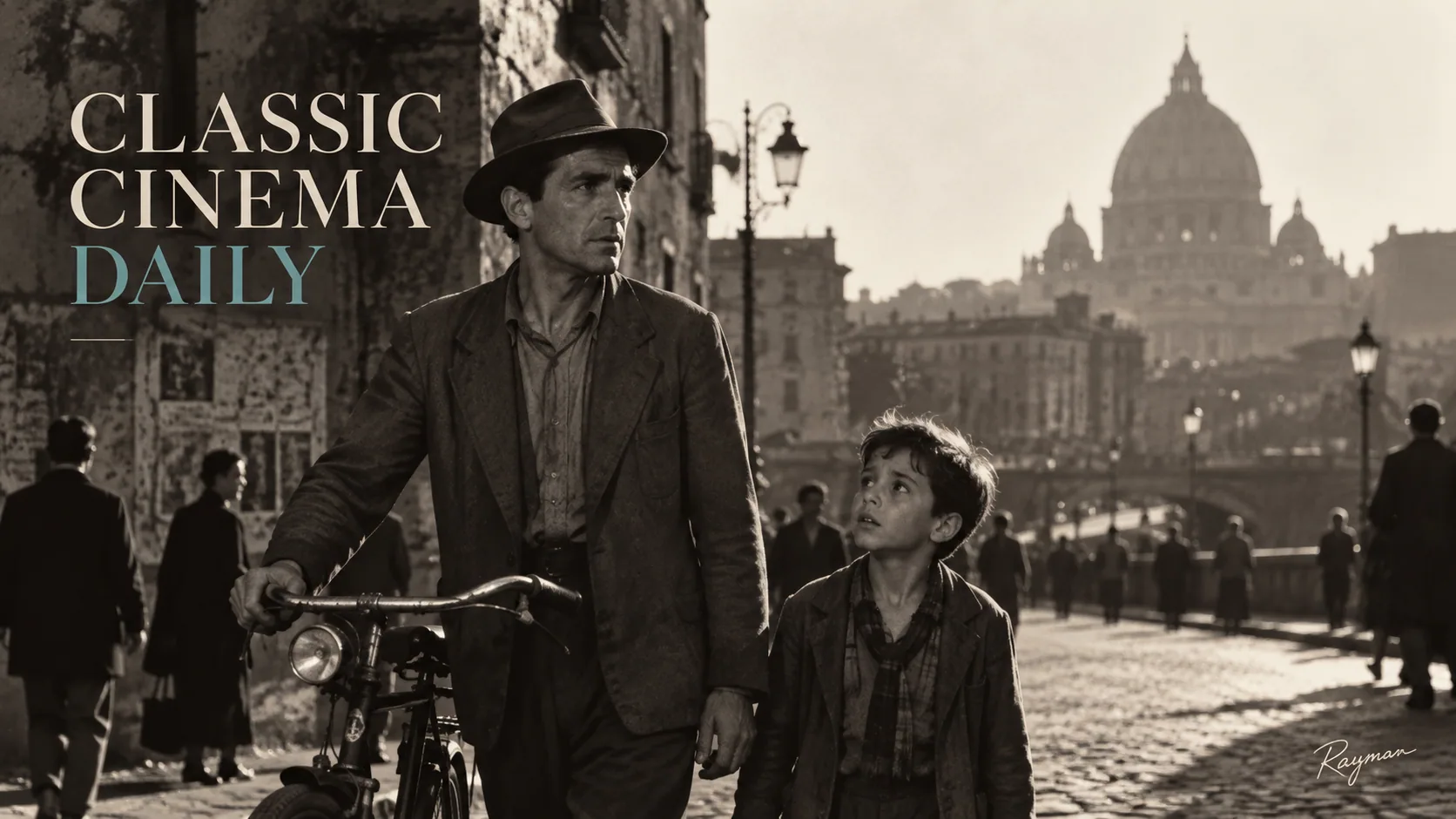
Rome, 1948. A long-unemployed man finally lands a job pasting posters — on condition that he owns a bicycle. His wife pawns the family's bed sheets to redeem his from the pawnshop; on his first day of work, it is stolen. Using non-professional actors and real streets, De Sica turned a small event into the most famous search in film history.
01Why this film today
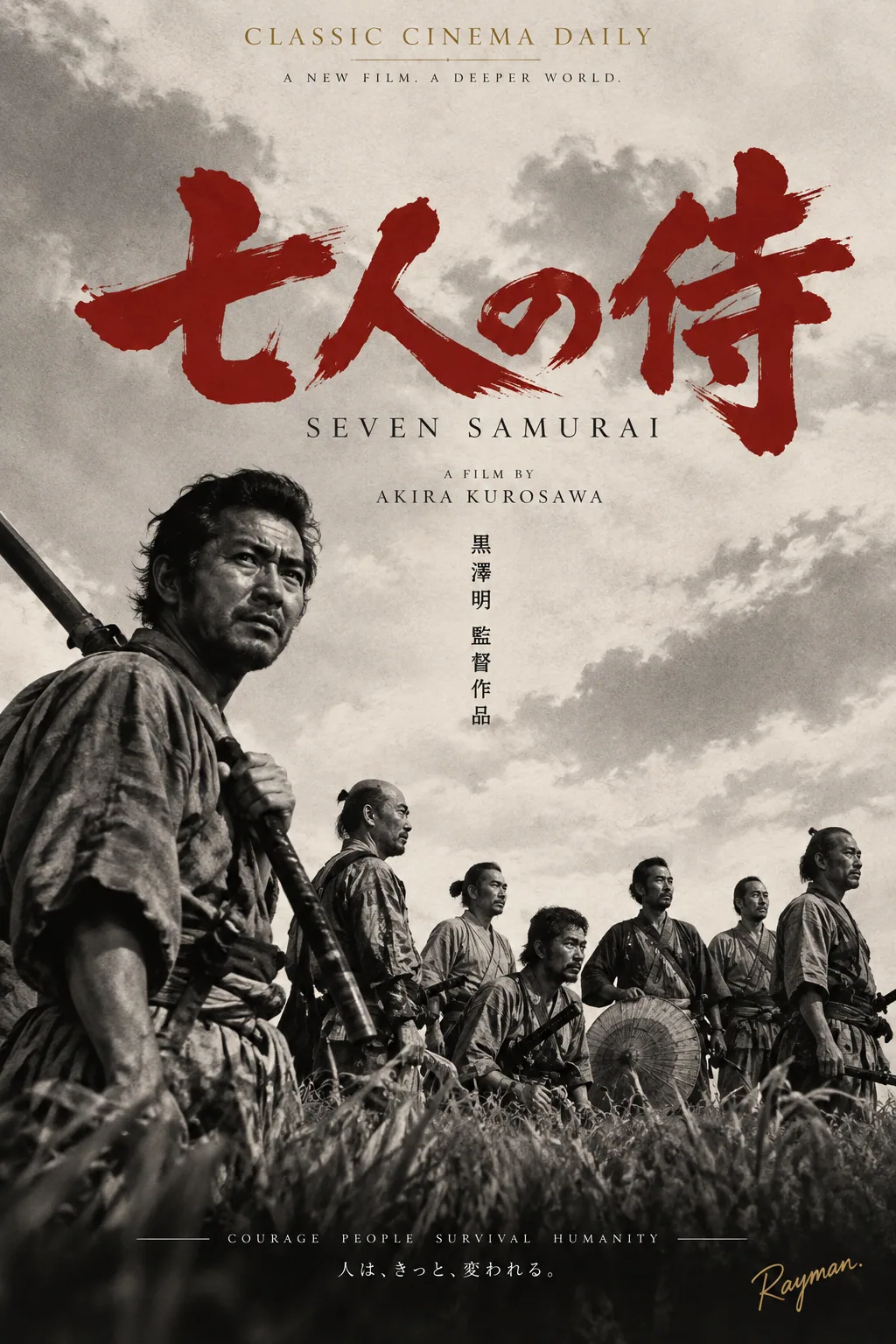
The archive moves from an American crime epic and a Japanese period ensemble to a small European event: one man, one bicycle, two days. The jump is deliberate. Bicycle Thieves is the dividing line on the question of what cinema is allowed to be about — before it, screen protagonists generally had to be worth filming; after it, a factory worker who has just found work qualified.
It is also unusually legible today: a job that requires you to already own the thing you cannot afford. The film never explains the system. It simply walks two days alongside a father and lets you watch him exhaust every option.
02Film details
- Chinese title
- 偷自行车的人
- English title
- Bicycle Thieves
- Director
- Vittorio De Sica / 维托里奥·德·西卡
- Year
- 1948
- Country
- Italy / 意大利
- Language
- Italian
- Genre
- Drama / Neorealism / 剧情 / 新现实主义
- Runtime
- 89 min
03About the film
二战结束不久的罗马。城里失业的人比工作多,连一份张贴广告海报的差事都有人抢。Antonio Ricci 拿到了这份工作,但雇主要求他必须自己有自行车——没有车,就没法去贴海报。
他曾经有一辆。为了吃饭,车早就押进了当铺。妻子 Maria 把家里仅剩的值钱东西——陪嫁的床单——抱去当铺换钱,把车赎了回来。
第二天是他上班的第一天。影片从这里开始,讲的就是这之后发生的事:他带着儿子 Bruno 在罗马的街道、市场、教堂和居民区里穿行,试图把车找回来。
这不是一部悬疑片。谁偷了车、能不能找回来,并不是它真正的问题。它真正在看的是:当一个人手里唯一的工具被拿走之后,他还剩下什么可以动用。
04Why it is a classic
Director and screenplay
Vittorio De Sica had been one of Italy's most popular comic actors before turning director; after the war he made The Children Are Watching Us (1944) and Shoeshine (1946). Bicycle Thieves came out of his collaboration with the screenwriter Cesare Zavattini, who supplied the story, adapted from Luigi Bartolini's 1946 novel of the same name. Seven writers are credited on the final script.
Zavattini was the movement's chief theorist. In "Some Ideas on the Cinema" (Sight & Sound, 1953) he argued that cinema should find the drama in everyday life and the extraordinary in the daily news, rejecting engineered plots. This film is the most complete realisation of that argument.
Performance
Almost no professional actors appear. Lamberto Maggiorani, who plays the father, was a factory worker; Enzo Staiola, the son, was eight and was reportedly spotted on the street helping his father sell flowers. This was method rather than economy: a face with no performance history carries no memory of previous roles, so only the character remains on screen.
Cinematography and location
Shot by Carlo Montuori entirely on location in Rome with no studio sets — streets, the Piazza Vittorio and Porta Portese markets, churches, pawnshops and crowded buses are the film's actual narrative space. It was edited by Eraldo Da Roma with music by Alessandro Cicognini, used sparingly enough that the emotion rests almost entirely on the scene itself.
Structure and film language
The film compresses its action into a few days and has exactly one plot spine: a search. That is neorealism's most radical substitution — instead of inventing events, it stretches a single event until every detail is visible. De Sica's real instrument is following: the camera keeps the character's pace and never knows more than he does, so the audience occupies the same position of ignorance.
The other key design is the son. Bruno stays beside his father almost throughout, not as a cute accessory but as a witness to his moral situation. The many walking-together shots let physical distance carry psychological distance. It is the most precise piece of construction in the film.
Historical impact
In 1950 it received an Academy Honorary Award as the most outstanding foreign-language film released in the United States in 1949 — there was no competitive foreign-language category yet — plus a nomination for Best Writing, Screenplay. That year also brought the BAFTA for Best Film and the Golden Globe for Best Foreign Film; the year before, the New York Film Critics Circle Award for Best Foreign Film and the National Board of Review awards for Best Film and Best Director.
In Sight & Sound's decennial poll it was voted the greatest film of all time by critics in 1952, the magazine's second such poll, topped by a film released only four years earlier. It placed 7th in 1962, 11th in 1992, 45th (critics) and 6th (directors) in 2002, and 33rd (critics) and 10th (directors) in 2012. It was 3rd in the 1958 Brussels World's Fair "Brussels 12" poll, and 2nd in BBC Culture's 2018 poll of 209 critics from 43 countries on the greatest foreign-language films. Rotten Tomatoes records 99% from 70 reviews.
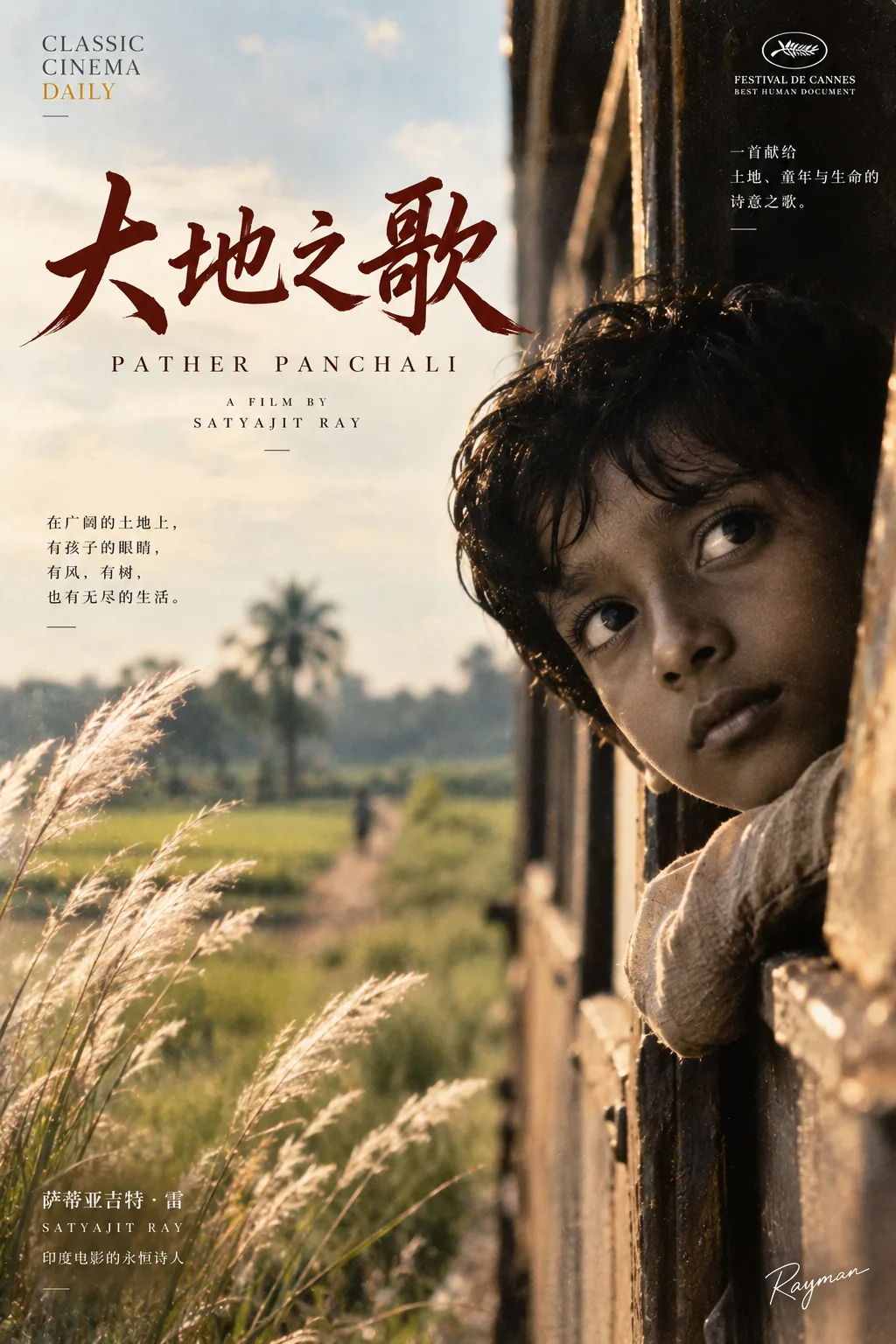
Its influence is broad: Satyajit Ray, Ken Loach and Iranian New Wave directors including Jafar Panahi have all spoken about what it did for them, and Kurosawa listed it among his favourite films. Ray's Pather Panchali uses exactly this method — real locations and non-professional actors — and this film had shown that the method could hold.
05What to notice
它其实改编自一部小说:原著是 Luigi Bartolini 1946 年出版的《Ladri di biciclette》。但成片与小说距离不小——扎瓦蒂尼的处理把重心从「抓住偷车贼」移到了「寻找」这个过程上。所以它并非许多人以为的那种纯即兴的纪录片式作品,它有明确的文学来源和七人编剧班底。
低成本不是姿态,是条件:制作成本约 13.3 万美元,在当时的国际制作里属于很低的数字;意大利国内票房约 42.9 万美元。战后的意大利电影工业缺资金也缺摄影棚,实景拍摄与非职业演员既是美学选择,也是唯一可行的路径。
片名在美国被译成了单数:意大利语原名 Ladri di biciclette 是复数——「偷自行车的人们」。1949 年在美国发行时被译作 The Bicycle Thief(单数)。这个复数其实指向影片的道德核心:偷车的从来不止一个人,而这正是它比一部寻物片大得多的地方。
1952 年它被评成了影史第一:《视与听》第二次十年评选,影评人投票把这部四年前刚上映的电影放在了史上最伟大影片的位置。此后它再未回到第一,但从未掉出过榜单。
它替后来者证明了一条路:萨蒂亚吉特·雷伊、肯·洛奇以及伊朗新浪潮的一批导演都从它这里取得过许可——用真实的街道和没有表演经验的人去拍严肃的题材。雷伊的《大地之歌》用的正是这套方法。
06Before you watch
先确认版本。片长 89 分钟,黑白,意大利语。这是这个片单里最短的一部,可以一次看完,不必分两次。
不要提前搜索结局。影片的收尾是影史被讨论最多的结尾之一,而且它的力量完全建立在「你不知道接下来会发生什么」这一点上。任何解析、影评、榜单介绍都可能毁掉它。看完再查。
不要期待反转或高潮。它没有配乐轰炸,没有剪辑花招,几乎没有戏剧化的音乐提示。它的力量来自累积——一件小事被拍到足够细,重量就自己出来了。如果你刚看过《七武士》,会发现两者在节奏上完全相反。
留意儿子的视线。Bruno 在片中几乎没有台词式的心理描写,他的反应全部通过看父亲的方式完成。这条副线值得单独跟一遍。
建议找修复版。这是黑白实景片,画质直接影响你对它构图的判断。目前有 4K 修复版本流通,比早期 DVD 好得多。
07In one line
It is not about a bicycle. It is about the whole process of a man being pushed into a corner by a small thing — and after Bicycle Thieves, the failure of ordinary people finally became a legitimate subject for cinema.