5 min
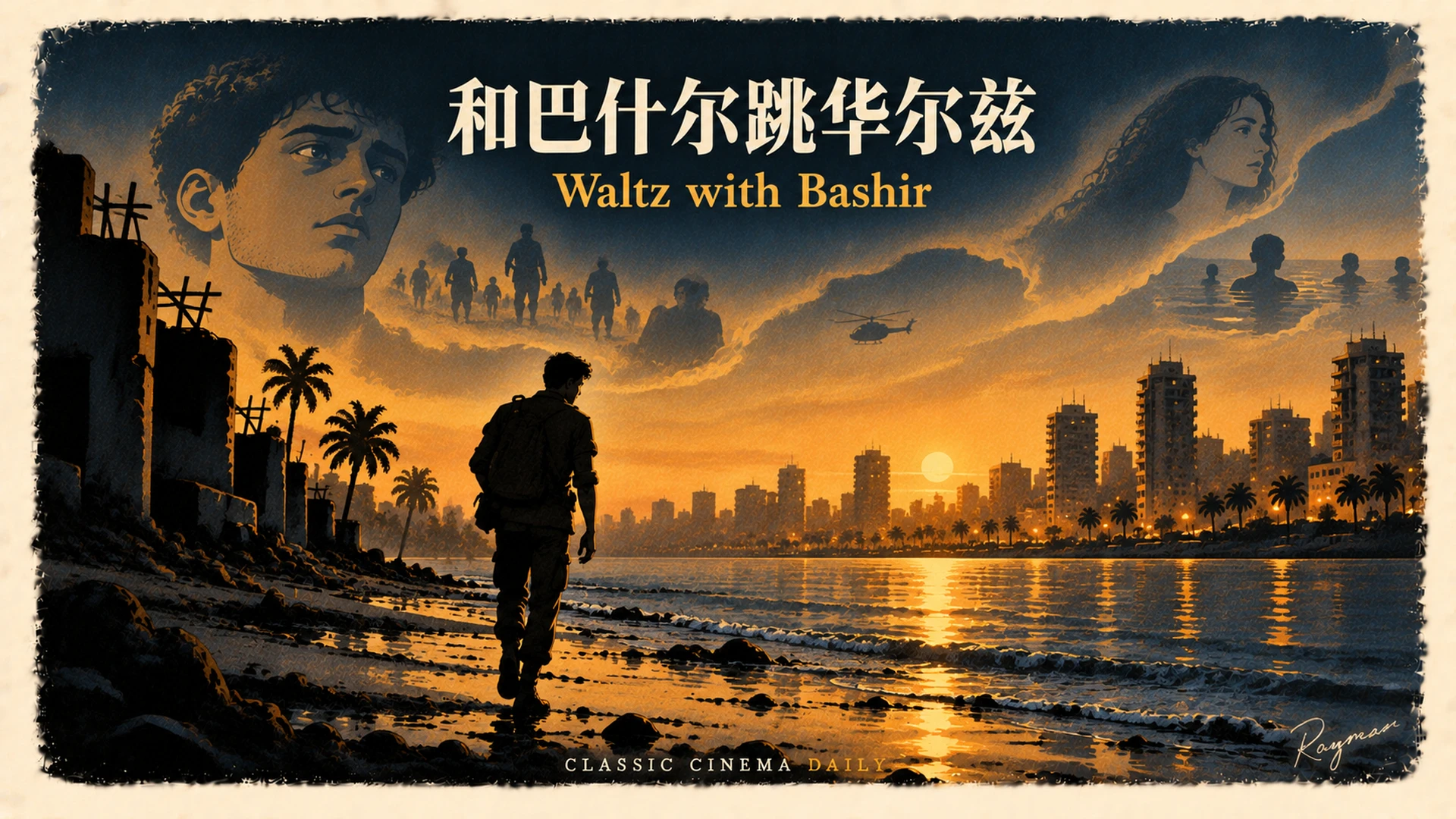
Waltz with Bashir
和巴什尔跳华尔兹
2008
Ari Folman
Israel / France / Germany · Animated documentary / War / Autobiography · 90 min
An Israeli director realises he remembers nothing of his own service in the 1982 Lebanon War. He goes from comrade to comrade collecting fragments that contradict each other, and draws them into an animated documentary. In competition at Cannes 2008; winner of the Golden Globe for Best Foreign Language Film.
01Why this film today
If Vertigo is memory refusing to let go, this is memory refusing to come back.
In 2008 Ari Folman was in his forties, living in Tel Aviv, making documentaries. An old friend took him for a drink and described a dream he had every night: twenty-six dogs running down the street, stopping outside his window, staring at him. The friend said they were the dogs he had killed during the 1982 Lebanon War.
Folman listened, and then understood something: he remembered the name of that war, remembered being drafted, remembered being sent to Lebanon — and could not recall a single image. Not a blur. Nothing.
The weeks after Frost's Descent, with their short days, suit a film like this. Ninety minutes, animated, and not remotely for children.
02Film details
- Chinese title
- 和巴什尔跳华尔兹
- English title
- Waltz with Bashir
- Director
- Ari Folman / 阿里·福尔曼
- Year
- 2008
- Country
- Israel / France / Germany / 以色列 / 法国 / 德国
- Language
- Hebrew
- Genre
- Animated documentary / War / Autobiography / 动画纪录片 / 战争 / 自传
- Runtime
- 90 min
03About the film
他从一个朋友问到另一个朋友,从以色列问到荷兰、德国,问当年同一个连队的战友:1982 年 9 月的那几个晚上,我们在哪里,我们看到了什么,我们做了什么。
每个人的回答都不一样,而且几乎每个人都说自己记不清。有人说记得一片橙色的光。有人说记得海。有人记得自己在哭,却说不出为什么。有人记得一群女人在瓦砾里跑。有人记得自己整晚在开枪,但记不得朝谁开。
Folman 把这些碎片画下来。他不确定哪些是真的,于是干脆把「不确定」本身画成了画面:梦境、幻觉、别人的转述、自己伪造出来的回忆,全部用同一套笔触。这正是这部片子最狠的地方——它不给记忆分级,梦和证词看起来一模一样。
04Why it is a classic
Start with the form, because the form is the argument.
It is not rotoscoping, though it is constantly described that way. The method Yoni Goodman developed at his studio in Israel combines Adobe Flash cut-out animation with traditional hand-drawn work: every drawing is cut into hundreds of separate pieces that move independently, and the illusion of motion comes from that partial movement. The pipeline ran backwards from normal animation — ninety minutes of live-action footage was shot first as reference, turned into storyboards and animatics, and then 2,300 key illustrations were drawn and composited. The film took four years.
Why animation at all? Folman's answer is blunt: memory is unreliable and constantly redrawn. Live-action footage claims to be a record. Animation never makes that claim; it admits from the first frame that it is a reconstruction.
It is that rare work accepted by both the animation and the documentary worlds at once: nominated for the Palme d'Or at Cannes in 2008, where it premiered in competition; winner of the Golden Globe for Best Foreign Language Film, the first documentary to take that award; nominated for the Academy Award for Best Foreign Language Film, the first animated film ever nominated — while failing to land a Best Animated Feature nomination and losing documentary eligibility under the Academy's rules that year, which says a good deal about where it sits. It also won the César for Best Foreign Film, the National Society of Film Critics award for Best Picture, the Writers Guild award for documentary screenplay, the Directors Guild award, and the European Film Award for Best Composer, for Max Richter. Rotten Tomatoes 97%, Metacritic 91. In 2013 The Guardian named it the greatest animated film ever made.
05What to notice
片名来自一个真实发生过的场面。 战友 Shmuel Frenkel 回忆:在贝鲁特一条贴满 Bashir Gemayel 巨幅海报的街上,他端着机枪一边扫射一边跳起了舞。当时车载广播放的正是肖邦《升 c 小调圆舞曲》。Folman 把这个画面画了出来,曲子也用进了片子——片名就此成立。
只有结尾不是动画。 全片 90 分钟都是画的,最后几分钟切进一段真实新闻档案影像。这个切换没有配乐、没有提示、没有过渡技巧。它是整部片子的落点,也是它最受争议的地方:前面所有的「重构」在这一刻被真实压住。
配乐是 Max Richter 写的。 除了他的极简主义配乐,片中还用了 OMD、Public Image Ltd、以色列乐队 HaClique 的歌。三种完全不同的年代质感叠在一起,正好对应「记忆混音」这件事——你记得的从来不是原声,是后来混过的版本。
在黎巴嫩被禁,但 2009 年 1 月在贝鲁特放过一场。 约 90 名观众,私人放映。一部关于那场战争的以色列电影,最后是在贝鲁特被人看完的。
它是 1962 年以来第一部在院线公映的以色列动画长片。 成本 130 万美元,全球票房 1,110 万。艺术参考包括漫画家 Joe Sacco、小说《第22条军规》与《五号屠场》,以及画家 Otto Dix。
06Before you watch
90 分钟,希伯来语,2.35:1。画面基本只有黄、褐、黑三色,人物轮廓用粗黑线勾出——这不是风格化,是「记忆的颜色」:旧照片、旧录像带、旧报纸。
不要把它当战争片看。全片几乎没有正面战斗场面,大量时间是人在说话、在回忆、在否认。它的紧张感来自「有人快要想起什么了」,而不是来自枪声。
结尾会突然变成真人影像。看之前不要提前知道那是什么画面——那是这部片子唯一的、也是最必要的冲击。
不适合当背景音播放。它要求你一直看着。
07In one line
It gives forgetting a visible shape: not a blank space, but a region that keeps being walked around. — Editorial note
Sources
Related films
Come and See
1985 · Soviet Union · War / Drama / Historical
Ashes and Diamonds
1958 · Poland · Drama / War / Thriller
The Battle of Algiers
1966 · Italy / Algeria · War / Historical drama / Docudrama
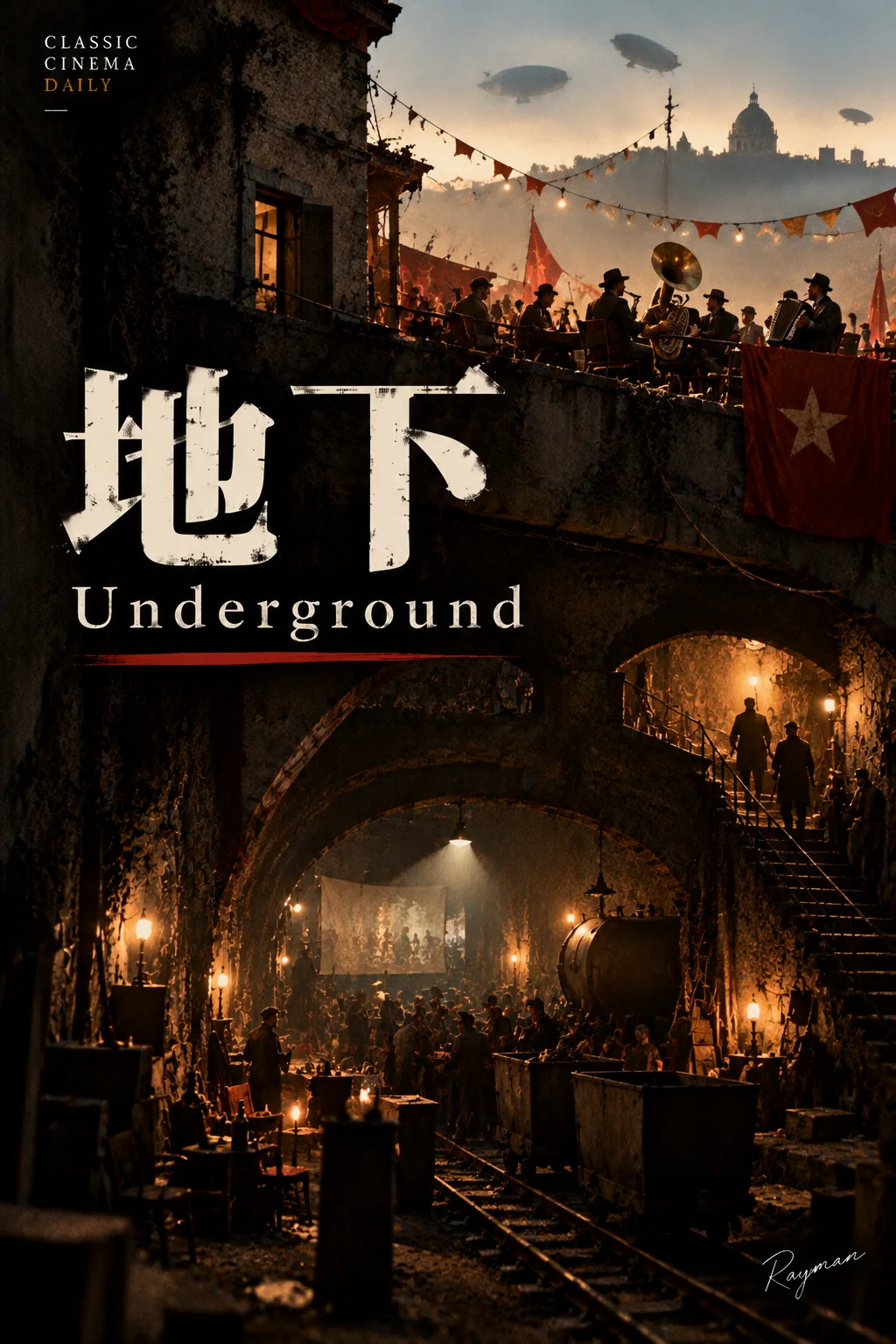
Underground
1995 · Yugoslavia / Bulgaria / Czech Republic / France / Germany / Hungary · Black comedy / Absurdist / Epic / War