4 min
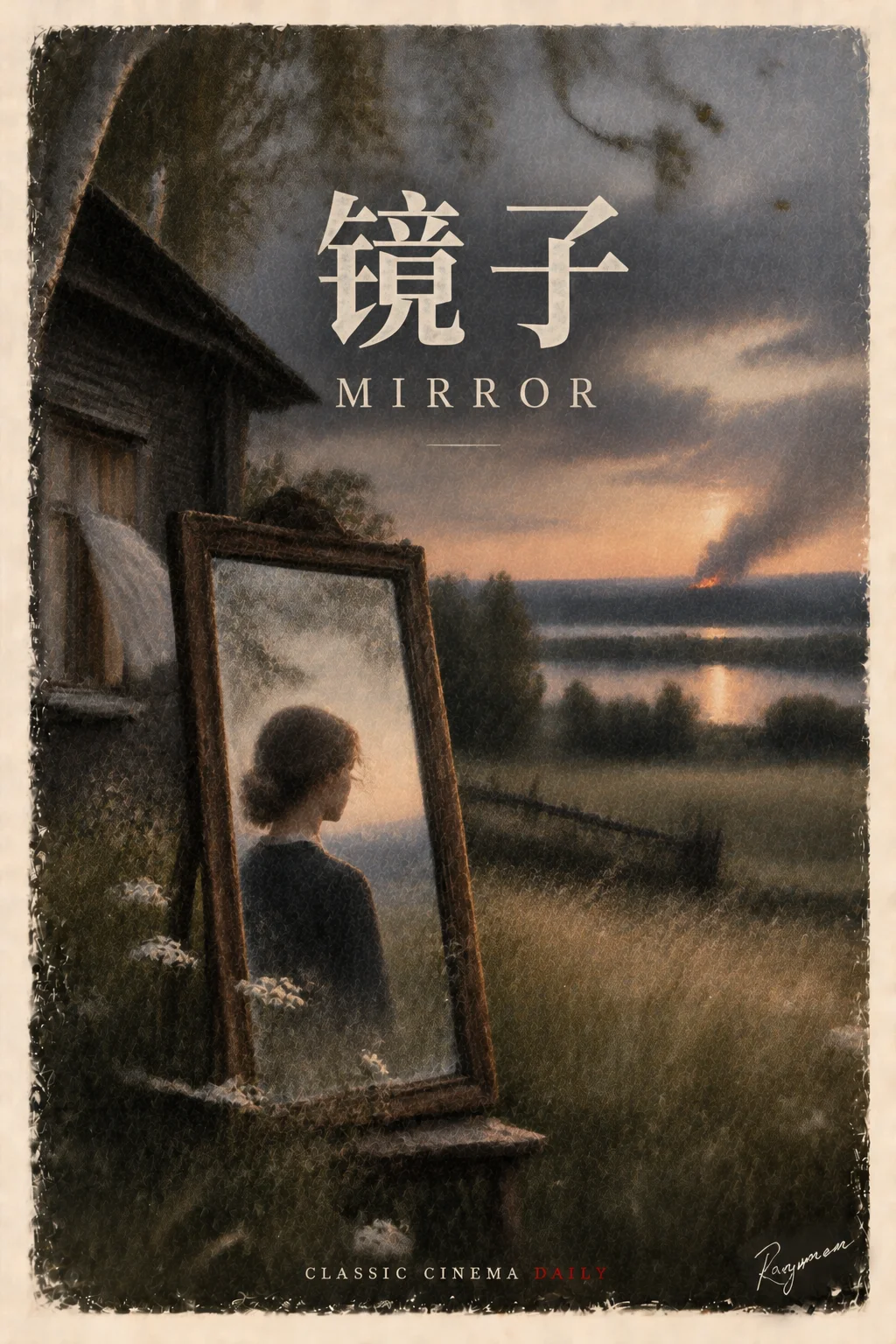
The Color of Pomegranates
石榴的颜色
1969
Sergei Parajanov
Soviet Union · Avant-garde / Biographical film / Experimental film · 78 min
Sergei Parajanov's 1969 Armenian poetic film: almost no dialogue, a life of the eighteenth-century poet Sayat-Nova told in chapters of miniature-like still tableaux. Its original title was changed by censors and it received only a limited release; Martin Scorsese's Film Foundation restored it in 2014.
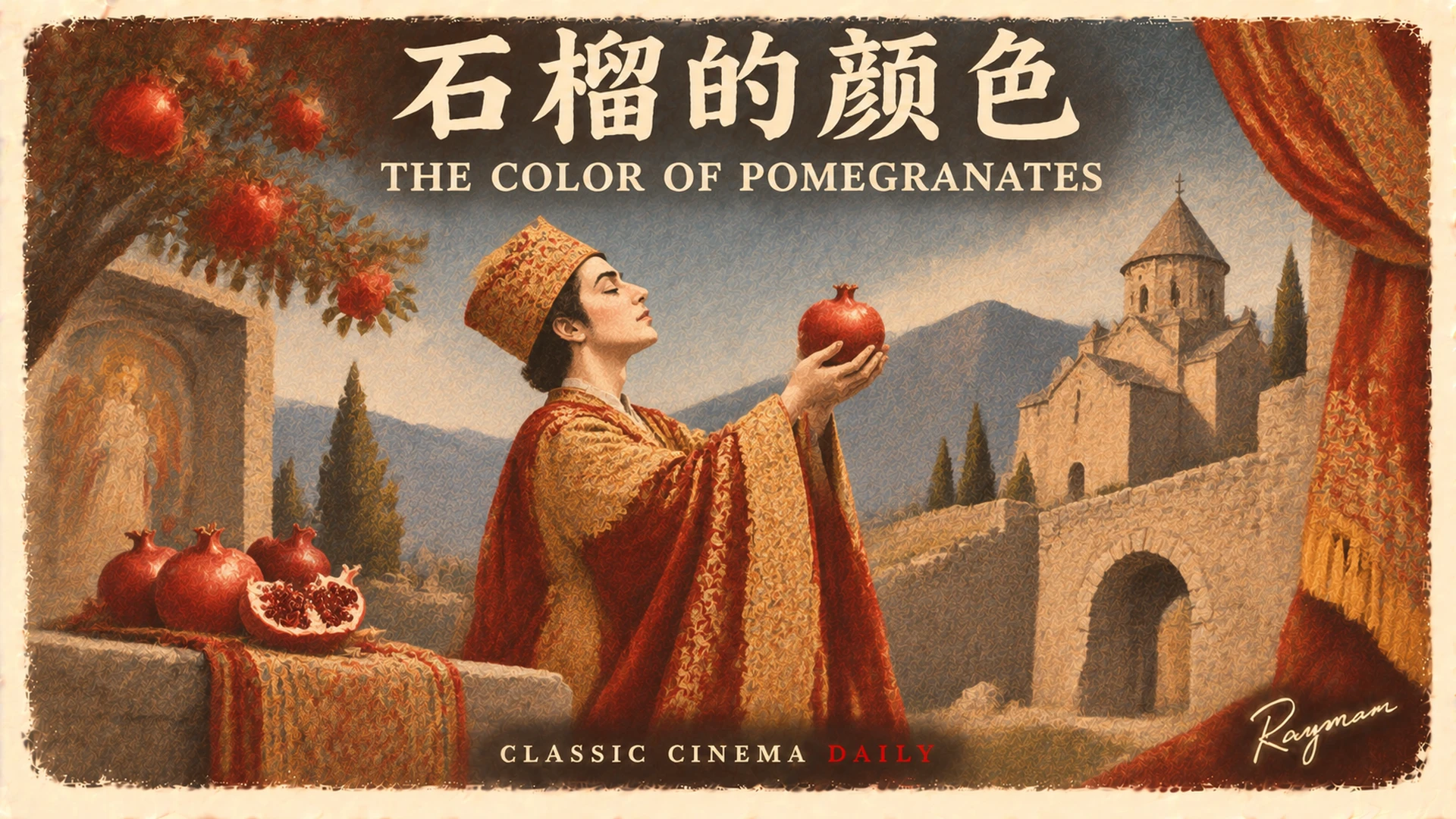
01Why this film today
Tomorrow, 7 November, is Lidong, the Start of Winter. A classical Chinese almanac defines the term as the point when 'all things are gathered in and stored away' — the moment in the year when whatever must be kept is brought indoors. Today pairs two films that each fold an entire era into a single work. Farewell My Concubine (1993) gathers half a century of Chinese history into one Peking opera; The Color of Pomegranates (1969) spreads the life of an eighteenth-century Armenian poet across a sequence of near-still images. In one, a person is swallowed by a role; in the other, a person is laid out as a picture. Made 24 years apart at opposite ends of Eurasia, both ask the same question: as the world outside keeps being rewritten, can anyone still gather themselves back in?
02Film details
- Chinese title
- 石榴的颜色
- English title
- The Color of Pomegranates
- Director
- Sergei Parajanov / 谢尔盖·帕拉杰诺夫
- Year
- 1969
- Country
- Soviet Union / 苏联(亚美尼亚)
- Language
- Armenian
- Genre
- Avant-garde / Biographical film / Experimental film / 先锋电影 / 诗性传记 / 实验电影
- Runtime
- 78 min
03About the film
它不按故事讲。以 18 世纪亚美尼亚诗人 Sayat-Nova 为题,却几乎没有对白,也不去演他做过什么;镜头摆出一幅幅近乎静止的画面——染坊里提起的毛线、摊开的手抄书页、石榴剖开后洇开的汁液、修道院的石墙——由字幕卡分成童年、青年、宫廷、修道院、梦、老年等章节。声音、音乐与偶尔的吟唱一直在,只是不负责解释。看它更像翻一本被拆散的画册:每一页都摆得很满,页与页之间得由你自己补上。
04Why it is a classic
It regularly appears on lists of the greatest films ever made: 84th in the 2012 Sight & Sound critics' poll, in Cahiers du cinéma's top ten for 1982, and holding a 94% approval rating on Rotten Tomatoes from 18 retrospectively collected reviews. Its claim to that status, however, is that it very nearly abolishes acting. Parajanov said his inspiration was the Armenian illuminated miniature, and that he wanted 'that inner dynamic that comes from inside the picture, the forms and the dramaturgy of colour'; he also described the film as a series of Persian miniatures. The result is a chain of near-static, frontal compositions in which people and objects are arranged as pictures, action is reduced to a minimum, and colour, fabric, utensils and ritual do the work of plot. Sofiko Chiaureli plays six roles, male and female among them, so that one face can be the poet, his lover and his muse in different chapters. None of this was acceptable in the Soviet Union of 1969. Censors objected that the film failed to educate the public about the poet: the title was changed from Sayat-Nova to The Color of Pomegranates, the poet's name was removed from the credits and chapter titles, and Sergei Yutkevich cut several minutes, reordered sequences and supplied new Russian chapter titles; outside Armenia the film received only a limited release. Michelangelo Antonioni called it 'of a stunningly perfect beauty'. Mikhail Vartanov went further, placing it beside the linguistic revolutions of Griffith and Eisenstein. In 2014 a digital restoration by Martin Scorsese's Film Foundation and Cineteca di Bologna returned it to the screen at the 67th Cannes Film Festival.
05What to notice
片长并不唯一:亚美尼亚版约 78 分钟,苏联发行时被 Sergei Yutkevich 删去数分钟、调整段落顺序并改换俄文章节标题,成为 73 分钟版;2014 年又按导演原意做了数字修复版。
原名 Sayat-Nova,取自 18 世纪亚美尼亚诗人与游吟诗人(1712–1795)。审查后片名改成 The Color of Pomegranates,演职员表与章节标题里诗人的名字被全部移除,改由亚美尼亚作家 Hrant Matevosyan 重写抽象诗意的标题。
Parajanov 说灵感是「亚美尼亚细密画」,想做出「从画面内部生出来的动态」,也把影片称作一组波斯细密画。评论者 Frank Williams 特别指出两个意象:石榴剖开后红汁在布上洇成古代亚美尼亚王国疆界的形状,以及染工从染缸里提起成束毛线。
Sofiko Chiaureli 一人分饰六个角色、男女兼演;影片几乎不用对白,靠字幕卡把诗人一生分成童年、青年、宫廷、修道院、梦、老年等章节,配乐出自 Tigran Mansuryan。
外景取自亚美尼亚北部 Lori 省的 Sanahin、Haghpat、Ardvi、Akhtala 等中世纪教堂,另有格鲁吉亚与阿塞拜疆巴库老城。2014 年修复由 Martin Scorsese 的 Film Foundation 与 Cineteca di Bologna 完成;本站已收 Scorsese 的 Raging Bull 与 Antonioni 的 Blow-Up。
06Before you watch
约 78 分钟(另有 73 分钟苏联发行版与 2014 修复版),亚美尼亚语,几乎无对白。它不提供可跟随的情节,也不是一道需要破解象征的谜题:字幕卡给出章节,画面自己停在那里。建议不要边看边找剧情,把它当作一本依次翻页的画册;若想补背景,先读一遍 Sayat-Nova 是谁即可。宗教图像与仪式密度很高,这正是它被审查的原因之一,不是装饰。
07In one line
It does not act out a poet's life; it lays it out as still images. What was removed was not the story but the right to explain it.