4 min
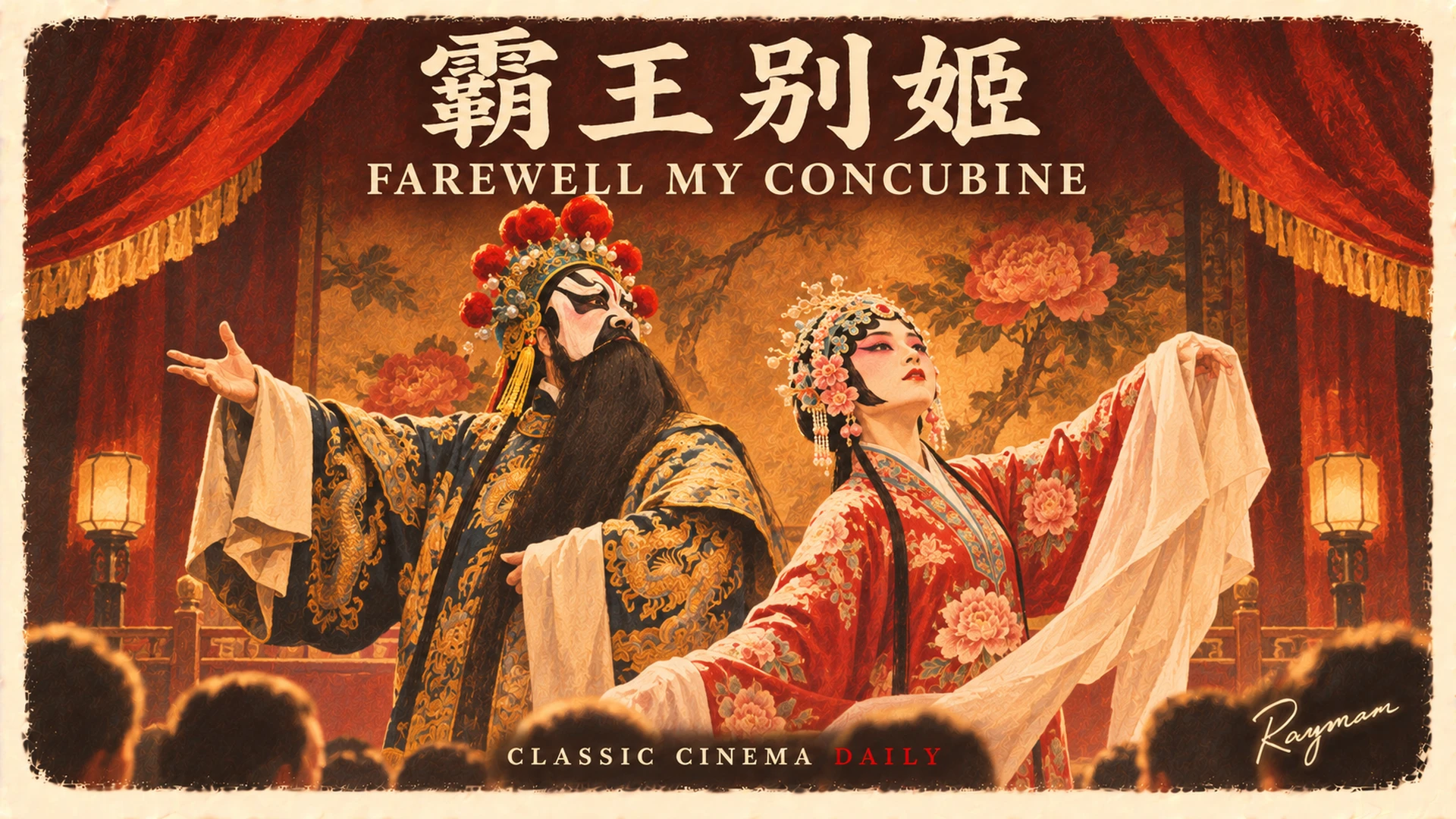
Farewell My Concubine
霸王别姬
1993
Chen Kaige
China / Hong Kong, China · Historical drama / Epic film / Peking opera · 171 min
Chen Kaige's 1993 epic follows two Peking opera performers from the early Republic into the second half of the twentieth century: the play on stage never changes, while the country around it is rewritten several times. Joint winner of the Palme d'Or with The Piano, and the first Chinese-language film to take the prize.
01Why this film today
Tomorrow, 7 November, is Lidong, the Start of Winter. A classical Chinese almanac defines the term as the point when 'all things are gathered in and stored away' — the moment in the year when whatever must be kept is brought indoors. Today pairs two films that each fold an entire era into a single work. Farewell My Concubine (1993) gathers half a century of Chinese history into one Peking opera; The Color of Pomegranates (1969) spreads the life of an eighteenth-century Armenian poet across a sequence of near-still images. In one, a person is swallowed by a role; in the other, a person is laid out as a picture. Made 24 years apart at opposite ends of Eurasia, both ask the same question: as the world outside keeps being rewritten, can anyone still gather themselves back in?
02Film details
- Chinese title
- 霸王别姬
- English title
- Farewell My Concubine
- Director
- Chen Kaige / 陈凯歌
- Year
- 1993
- Country
- China / Hong Kong, China / 中国大陆 / 中国香港
- Language
- Mandarin
- Genre
- Historical drama / Epic film / Peking opera / 历史剧情 / 史诗 / 京剧
- Runtime
- 171 min
03About the film
1924 年的北平,一个孩子被母亲送进戏班学戏。他与同门师兄一起挨打、一起长大,多年后两人成了台上一对名角,专演〈霸王别姬〉:一个饰虞姬,一个饰项羽。戏里是固定的生离死别,戏外是几十年不断改写的世道。影片真正盯住看的,是那身行头穿久之后,人还分不分得清哪一句是台词、哪一句是自己。
04Why it is a classic
It won the Palme d'Or at the 46th Cannes Film Festival in 1993, jointly with Jane Campion's The Piano, and became the first Chinese-language film to take the prize. The same year brought a Golden Globe for Best Foreign Language Film and a BAFTA for Best Film Not in the English Language, plus two nominations at the 66th Academy Awards, for Best Cinematography and Best Foreign Language Film. Its importance lies less in the trophies than in its method: Chen Kaige uses the Peking opera Farewell My Concubine as a measuring device, keeping the play fixed while the country outside it is rewritten from the early Republic into the decades that follow. The film's themes are usually named as identity confusion and the blurred line between real life and the stage. Cheng Dieyi is trained as a dan, a female role; an opening in which he repeatedly misrecites a line about his own sex and is beaten for it announces the whole design — once a person has been trained into someone else, how does he call himself back? It is one of the landmark films of the Fifth Generation, the movement that brought Chinese directors to world attention, and Time magazine placed it among its 100 best films in global history in 2005. A few weeks after its Chinese release, changes were demanded; the version approved for re-release in September 1993 had 14 minutes removed. The 171-minute original is the one now generally circulated.
05What to notice
编剧是芦苇与李碧华,改编自李碧华同名小说;摄影顾长卫、配乐赵季平,主演张国荣、张丰毅、巩俐。影片 1993 年 1 月 1 日在香港首映,同年 10 月在美国上映。
两个孩子学的是不同行当:一个练旦角、一个练净角;成年后专演〈霸王别姬〉,程蝶衣饰虞姬、段小楼饰项羽。练一出尼姑思凡的折子戏时,一句认定自己性别的台词总被念反、总因此受罚,是全片最常被提到的开场细节。
1993 年戛纳金棕榈由它与 Jane Campion 的 The Piano 共同获得,是首部获此奖的华语片;本站 1993 年格里已收 The Piano,两片正好对着看。
上映数周后,因对同性情感、性别身份与 1960 年代动荡的描写被要求修改;1993 年 9 月获准再映时删去 14 分钟。2005 年《时代》杂志把它选进影史百佳名单。
一把旧剑在片中几度易手:先在张公公宅里被师兄许诺相赠,多年后又由袁四爷送到蝶衣手中。道具不解释剧情,只把三人之间的位置一次次重新摆出来。
06Before you watch
171 分钟,普通话,彩色。它是一部有完整情节的历史长片,不必先懂京剧:戏班的规矩、行当与那出〈霸王别姬〉,前半段就会交待清楚。需要注意的是国内公映曾有过删去 14 分钟的版本,认准 171 分钟原版。片中横跨二十世纪中国多个时期,但人物关系比历史线更吃重,不必按年代史逐点核对。
07In one line
A film that folds half a century into one opera: on stage, a farewell; off it, a man learning to give the role back.
Sources
Related films
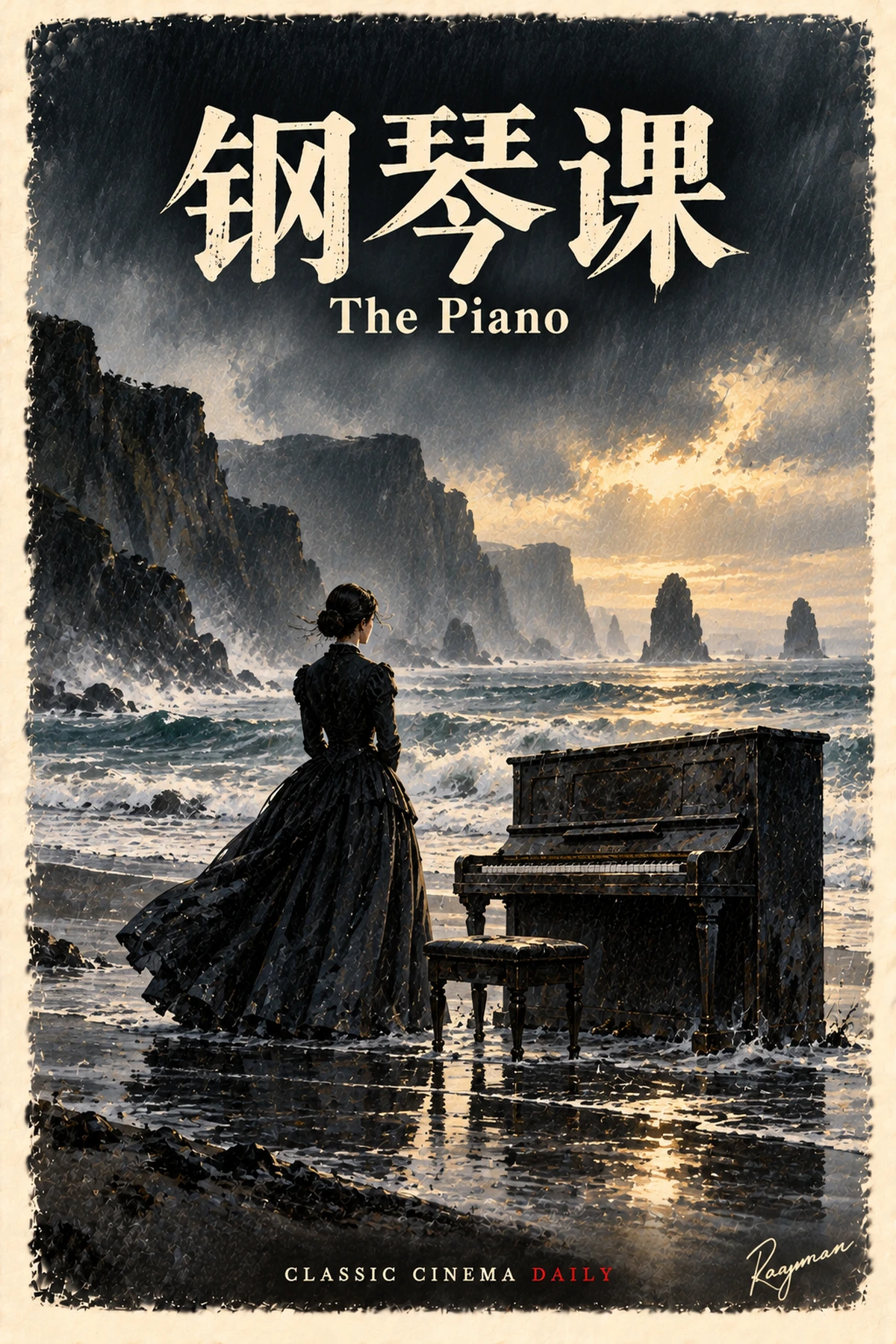
The Piano
1993 · New Zealand / Australia / France · Drama / Romance / Historical drama
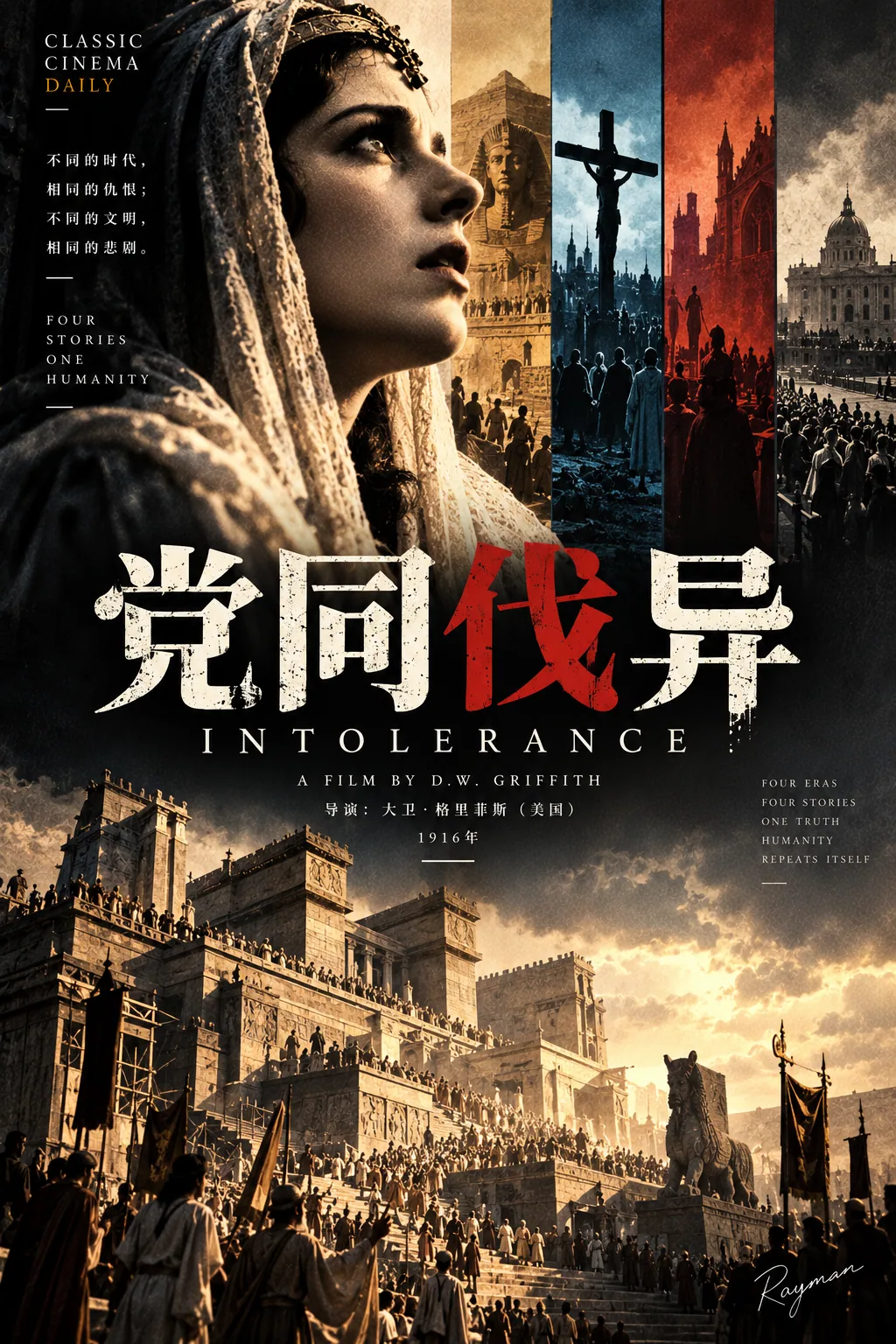
Intolerance
1916 · United States · Epic / Silent film / Anthology film / Historical drama
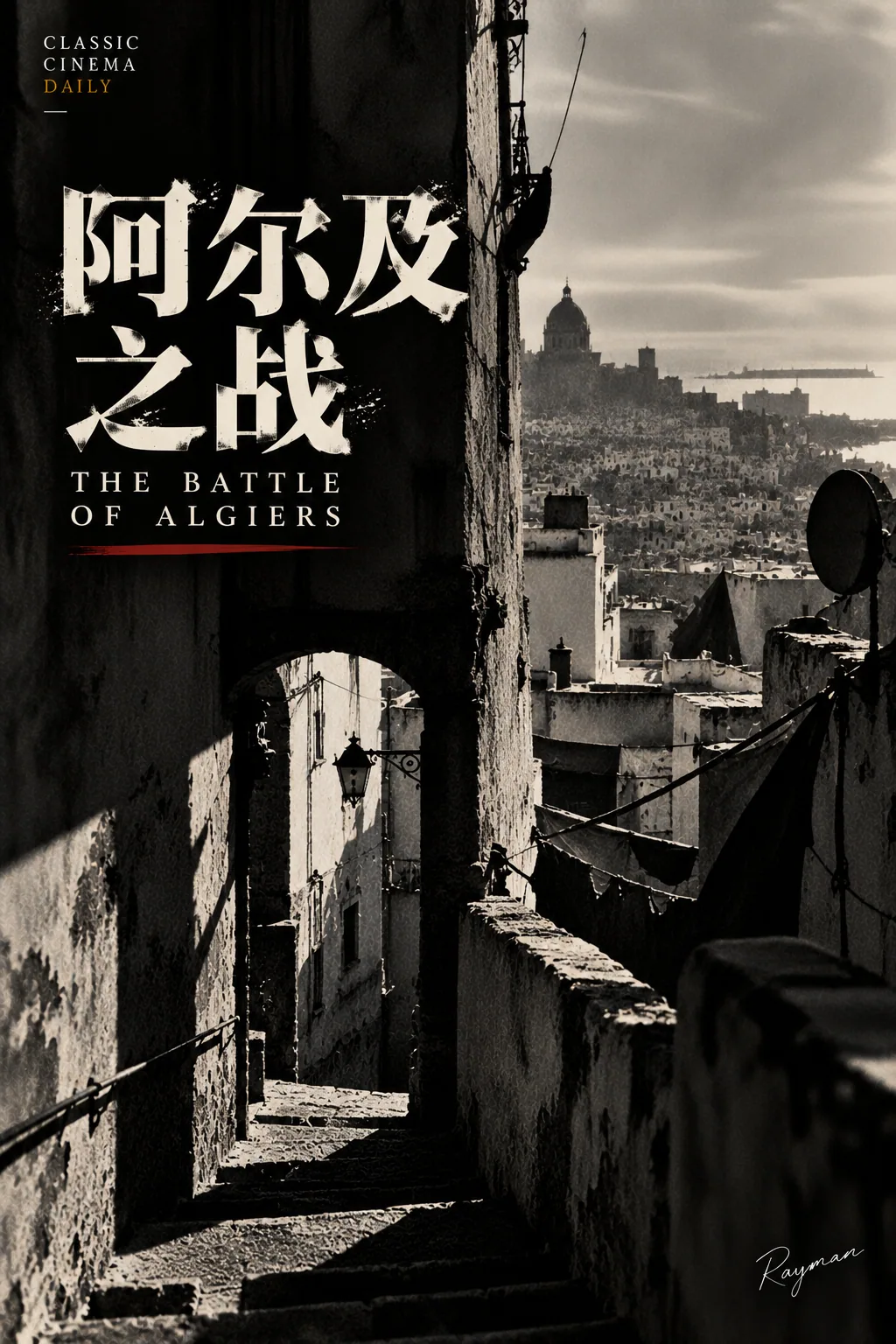
The Battle of Algiers
1966 · Italy / Algeria · War / Historical drama / Docudrama
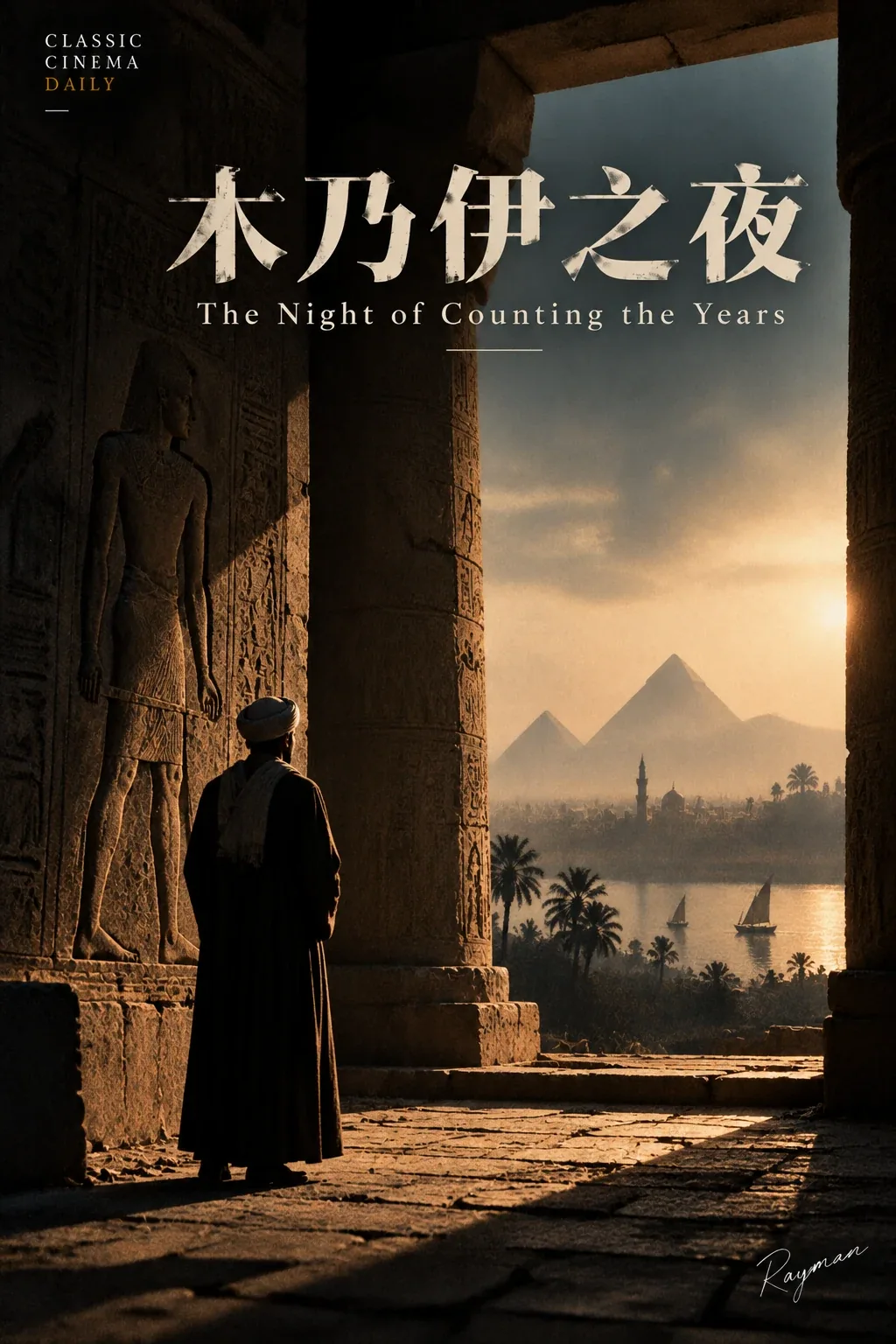
The Night of Counting the Years
1969 · Egypt · Historical drama / Drama / Neorealism