10 min
2001: A Space Odyssey
2001太空漫游
1968
Stanley Kubrick
United Kingdom / United States · Science Fiction / Adventure / Epic · 139 min
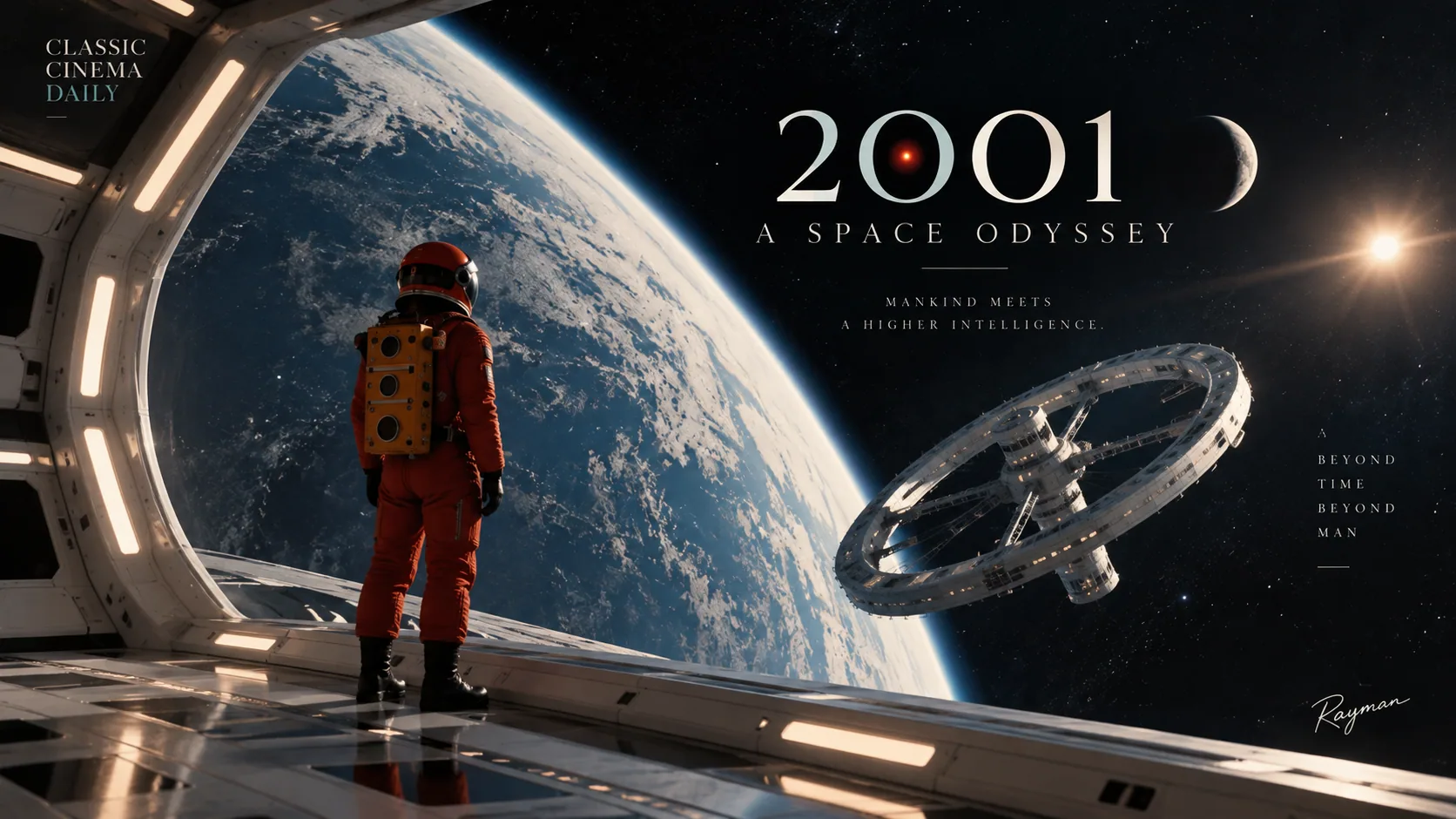
In 1968 Kubrick compressed the whole span of human history — from a bone club to a star child — into a film with almost no dialogue. A black monolith on the Moon, a ship bound for Jupiter, and a computer that starts to lie: more than half a century on, it is still the line that divides science fiction.
01Why this film today
The archive has run four films that are all, in one way or another, stories about people: a Japanese period ensemble, an American crime epic, a small event on the streets of Rome, a Swedish religious allegory. Today the scale changes. 2001 is not about any individual; it is about where the species sits in the universe, and it measures time in millions of years.
It is also the most natural choice for today's main visual. The monolith, the wheel-shaped space station, the ship's corridors, the Star Gate — none of these need subtitles, language, or prior knowledge to be recognised. They are among the most reproduced images of the twentieth century.
The contrast is deliberate. The first twenty-five minutes contain no dialogue at all and the film uses very little of it throughout; emotion is carried by composition, music and editing rather than performance. If everything you have seen so far has been a story film, this one resets what you expect a film to be about.
02Film details
- Chinese title
- 2001太空漫游
- English title
- 2001: A Space Odyssey
- Director
- Stanley Kubrick / 斯坦利·库布里克
- Year
- 1968
- Country
- United Kingdom / United States / 英国 / 美国
- Language
- English
- Genre
- Science Fiction / Adventure / Epic / 科幻 / 冒险 / 史诗
- Runtime
- 139 min
03About the film
影片由四个段落组成,段落之间靠剪辑而非台词连接。
第一段叫「人类的黎明」:数百万年前的非洲,一群类人猿在干旱中挣扎,直到一块黑色石碑出现在他们中间。第二段直接跳到片名所指的那一年——人类已经在月球上建起基地,并且在月面之下挖出了同样的东西。第三段是一艘飞向木星的飞船:船上有五名船员,三名在休眠舱中,醒着的只有 David Bowman 与 Frank Poole,以及一台负责操控全船的计算机 HAL 9000。第四段,是飞船抵达目的地之后发生的事。
真正的主角不是任何一个宇航员,而是一件从第一个镜头就在场、却从未被解释过的东西。它出现了三次,每一次都把故事推向更远的地方。影片从不告诉你它是什么——这是设计,不是疏漏。
04Why it is a classic
Director and screenplay
After Dr. Strangelove (1964), Stanley Kubrick announced that his next film would be about extraterrestrial life, aiming at what he called the proverbial good science fiction movie. Through a Columbia Pictures employee he reached Arthur C. Clarke, then living in Ceylon, and the two met in New York in April 1964; the collaboration lasted nearly four years. The screenplay is credited to both, drawn mainly from Clarke's 1951 short story The Sentinel and incorporating others such as Encounter in the Dawn. Clarke wrote the novel version in parallel with the film.
The title was Kubrick's, and Clarke said the idea was entirely his. Earlier working titles included Journey Beyond the Stars, Universe, Tunnel to the Stars and Planetfall. The film was shot and cut almost entirely in southern England, using MGM-British Studios and Shepperton Studios.
Cinematography and visual effects
Geoffrey Unsworth was the cinematographer, with John Alcott shooting the Dawn of Man sequence after Unsworth left for another project. The film was shot in Super Panavision 70 — 65mm negative, spherical lenses, 2.20:1 — among the highest-grade commercial formats of its day.
Douglas Trumbull was special effects supervisor. Kubrick wanted the effects achieved in camera where possible, avoiding the image degradation of blue screen and travelling mattes. The rotating centrifuge set used for the ship's interior was built by the engineering firm Vickers-Armstrong: 38 feet in diameter, about 30 short tons, costing roughly $750,000. The Discovery One model was 55 feet long. Weightlessness was achieved by suspending actors on wires from the top of the set with the camera below. The Star Gate was made with slit-scan photography over thousands of high-contrast images — Op art paintings, architectural drawings, moiré patterns, printed circuits and electron micrographs of molecules and crystals — while the nebular effects were shot slowly in a darkroom cloud tank using paint and chemicals.
Kubrick was closely involved in the design too, choosing fabrics and furniture. The film features tableware designed by Arne Jacobsen, Olivier Mourgue's red Djinn chairs and Eero Saarinen's 1956 pedestal tables, with Eurostile Bold Extended and Futura among the typefaces used for interfaces and signage. Those choices became part of the common vocabulary of futuristic design.
Music
The film uses no original score, only existing classical works: Richard Strauss's Also sprach Zarathustra, Johann Strauss II's The Blue Danube, an excerpt from Khachaturian's Gayane ballet suite, and Ligeti's Requiem, Lux Aeterna and Aventures.
Kubrick had commissioned an original score from Alex North, who had written the music for Spartacus and Dr. Strangelove, but dropped it in post-production in favour of the classical recordings that had been used as temporary tracks. North only discovered the substitution when he saw the film at its premiere. The decision changed the grammar of film scoring: music no longer follows emotion but works in counterpoint with the image.
Performance and sound
Keir Dullea plays David Bowman and Gary Lockwood plays Frank Poole, with William Sylvester as Heywood Floyd, Daniel Richter as the man-ape Moonwatcher, and the Canadian actor Douglas Rain as the voice of HAL 9000. In the scene where Bowman shuts HAL down, the pitch and rate of the voice are progressively lowered using an Eltro information rate changer, with the result that the actor's voice passes through the device twice. One of the film's most famous lines belongs to that computer: "I'm sorry, Dave. I'm afraid I can't do that."
Film language
Two cuts are studied more than any others, and neither depends on dialogue. The first ends the Dawn of Man: a man-ape throws a bone into the air and it is cut, mid-fall, into an orbiting satellite — one edit spanning millions of years. The second is the film's total refusal to explain: what the monolith is, why it exists, what the child at the end means. Kubrick made that absence part of the structure rather than an aesthetic of restraint.
Historical impact
The film premiered at the Uptown Theater in Washington, D.C. on 2 April 1968 at 160 minutes; within days Kubrick cut roughly 20 minutes, leaving a general release version of about 139 minutes. The budget was around $10.5 million against an initial $6 million — $4.5 million over, sixteen months late. Reviews at the time were sharply divided and New York critics were especially hostile; it has since been comprehensively reassessed, and counting re-releases it was the highest-grossing film in the United States and Canada in 1968.
It received four Academy Award nominations and won Best Visual Effects, an award made to Kubrick alone — Trumbull went uncredited and the two did not speak for a decade. It remains Kubrick's only Oscar. In 1991 it was selected for preservation in the United States National Film Registry. In the 2022 Sight & Sound poll it placed in the critics' top ten and was voted first in the directors' poll. The 1984 sequel, 2010, had no involvement from Kubrick.
05What to notice
电影和小说是同时写的:库布里克与克拉克从 1964 年起合作,剧本与小说几乎并行推进,克拉克的小说版在影片上映前后出版。但两者的结尾并不相同——小说给出了明确的解释,电影拒绝解释。库布里克坚持把答案拿掉,这个分歧是理解整部影片的关键。
那块石碑原本是透明的四面体:初版设计直接取自短篇《The Sentinel》,是一座 12 英尺高的透明有机玻璃金字塔。因结构限制,伦敦一家制作公司建议改成平板状;美术指导 Anthony Masters 又建议把表面处理成哑光黑,于是有了银幕上那个东西。形状改变了,但「不可解释」这一点从设计稿起就没变过。
片中没有任何一帧电脑特效:Keir Dullea 在 2014 年说过一句被广泛引用的话——「这部电影没有一英尺是用电脑生成特效做的。」1966 年 6 月到 1968 年 3 月的大部分时间都花在 205 个特效镜头上,全部依靠光学、机械与实拍手段完成。
它当年被剪掉的内容不少:月面基地的一堂绘画课(其中出现了库布里克的两个女儿)、基地生活场景、Floyd 通过视频电话给女儿买丛猴的片段,以及一段十分钟的黑白开场(内含对 Freeman Dyson 等科学家的访谈),都在早期试映后被移除。首映版 160 分钟与公映版 139 分钟的差额,主要就是这些。
上映时观众并不买账:Dullea 回忆纽约首映时约有 250 人中途离场。几个月后,宣发方推出新标语「2001 – the ultimate trip!」,把它推向当时正在形成的反文化观众。这条标语反过来塑造了它的公众形象,也部分解释了它为何能从一个票房失利者变成一部长期重映的电影。
06Before you watch
版本:片长 139 分钟,彩色,英语,对白极少。这是公映版长度。1968 年首映版为 160 分钟,后来被库布里克亲自剪短,那个长版本已经看不到了。
不要试图「看懂」。影片刻意不提供解释,包括结尾。第一次看时最有效的方式是把它当成一次视听体验,而不是一道谜题——跟着画面和音乐走,不要中途暂停去查资料。
用尽可能大的屏幕和音响。这部片子的信息大量在构图和声场里:65mm 拍摄、2.20:1 画幅,在手机上看会损失大半。如果能找到 70mm 放映或 4K 修复版,优先选它。
留意前二十五分钟。「人类的黎明」段落没有一句台词,只有环境音、呼吸声和配乐。它是理解全片的钥匙——后面发生的一切,都是这一段被放大后的样子。
戴耳机看 HAL 那场戏。全片最著名的一段「表演」出自一台计算机,靠的是语速、停顿和音高的细微变化。音轨的信息量比画面更大。
注意中间那一刀。从骨头到卫星的剪辑,是电影史上被分析得最多的剪辑点之一。看的时候别错过。
07In one line
It tells the longest story in human history with almost no dialogue, then refuses to answer a single question it raises — and more than half a century later, no other science-fiction film has dared to do the same.
Sources
Related films
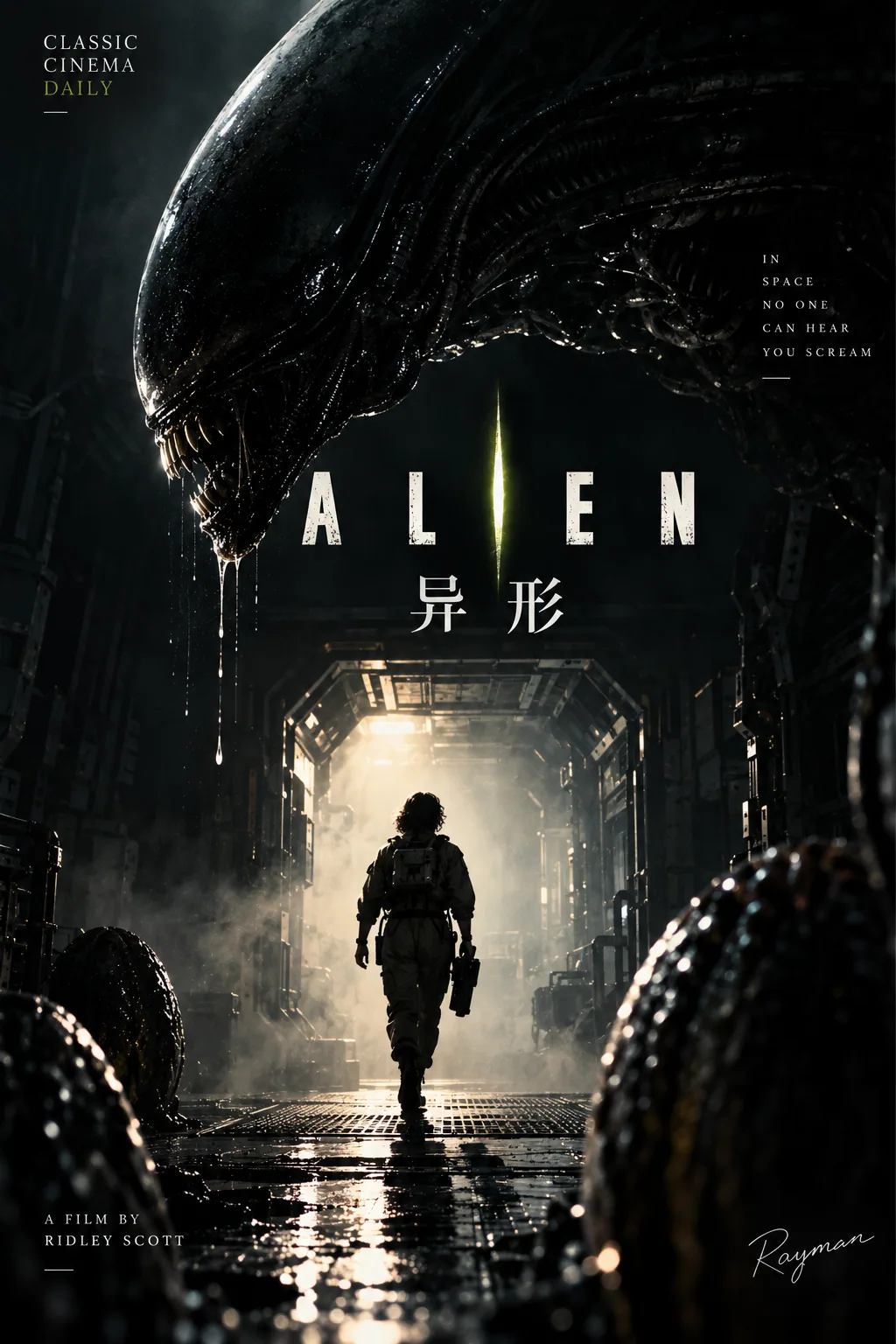
Alien
1979 · United Kingdom / United States · Science Fiction / Horror / Thriller
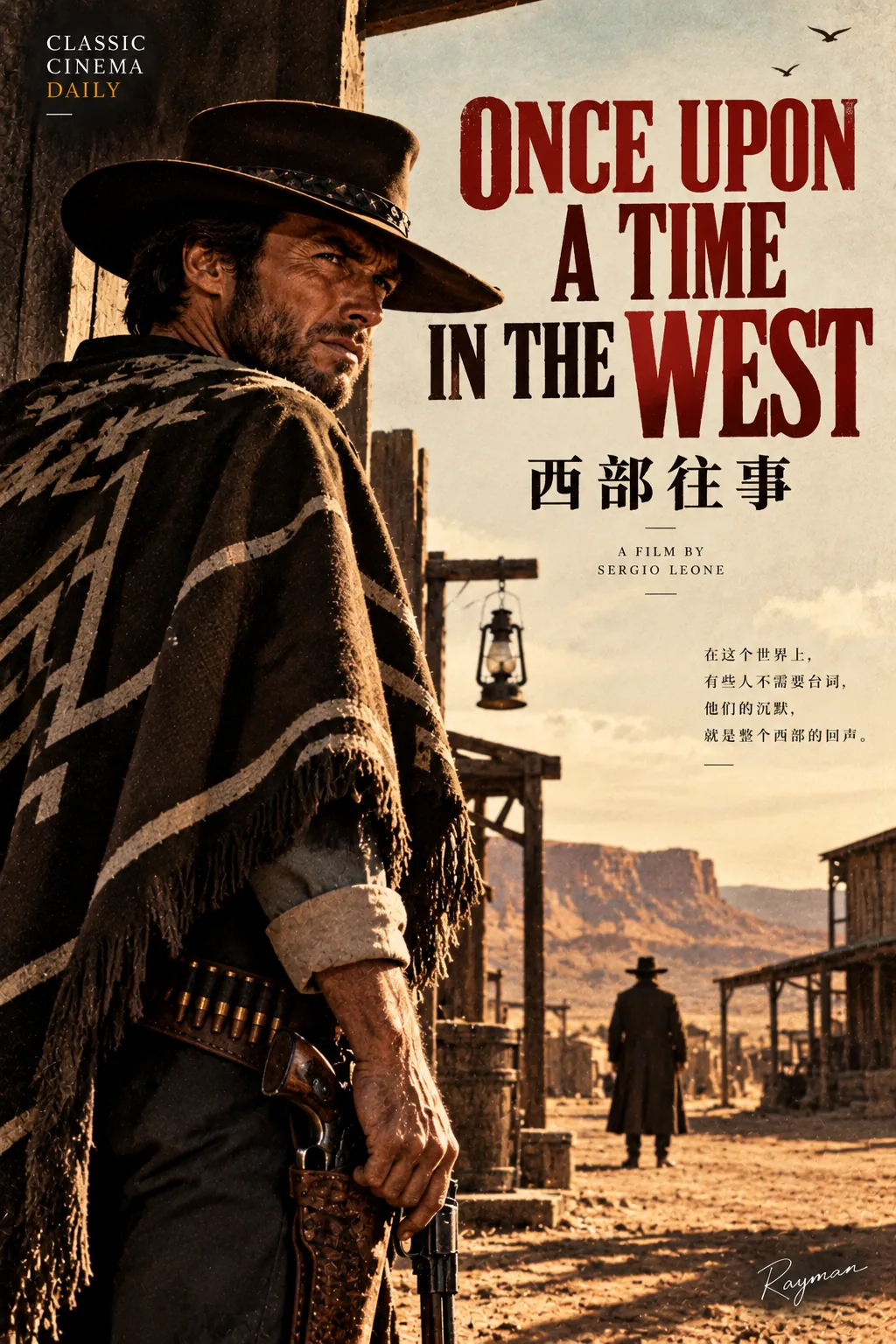
Once Upon a Time in the West
1968 · Italy / United States · Western / Epic / Drama
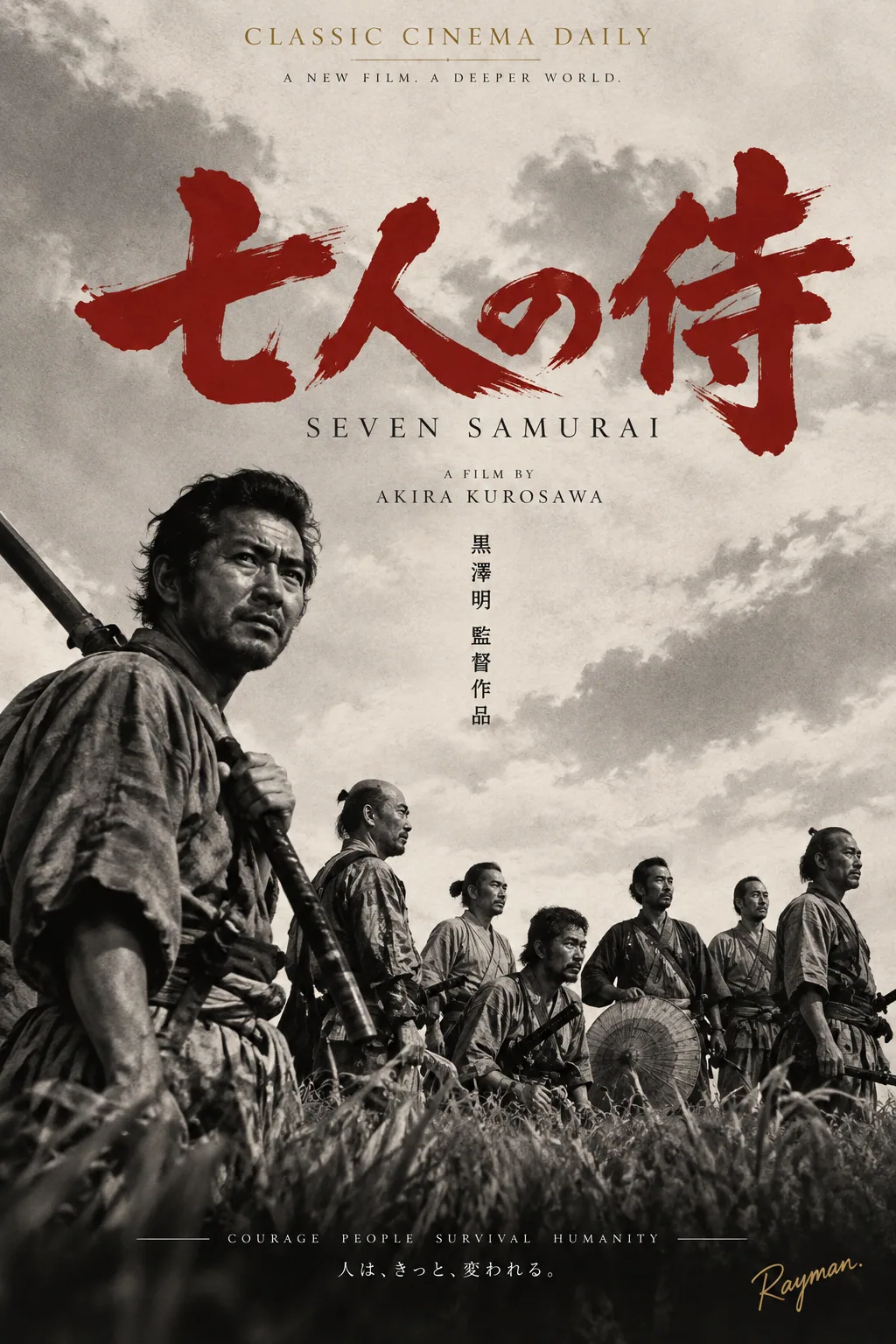
Seven Samurai
1954 · Japan · Jidaigeki / Action / Adventure / Drama
Metropolis
1927 · Germany · Science Fiction / Drama / German Expressionism