5 min
Mirror
镜子
1975
Andrei Tarkovsky
Soviet Union · Avant-garde / Drama / Autobiographical · 106 min
Tarkovsky's most private film: a dying poet remembers his mother, the war, a divorce and a childhood, with Soviet newsreels and his father's poems threaded through. Accused of elitism and barely released at home in 1975; now eighth in the Sight & Sound directors' poll.
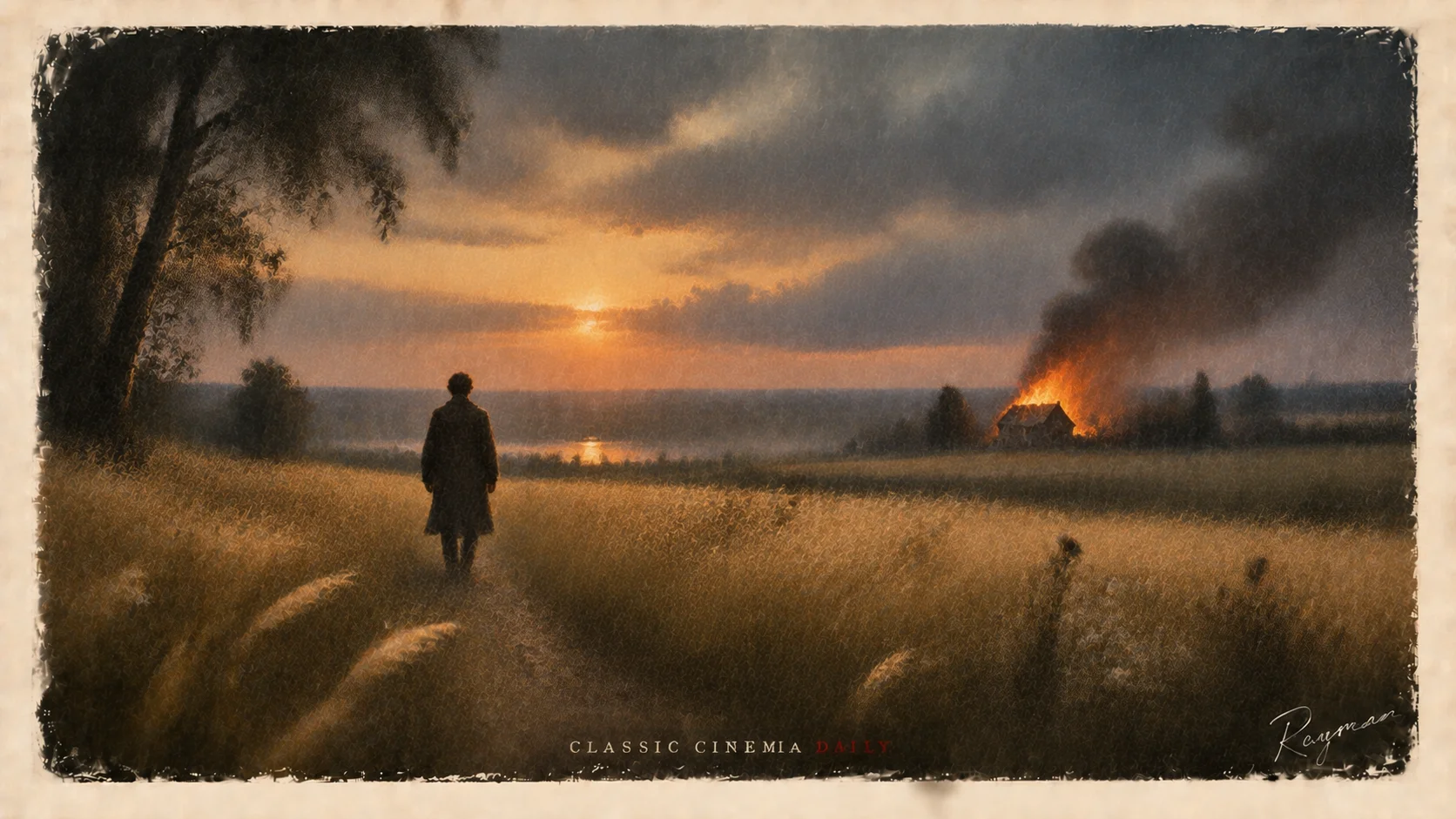
01Why this film today
On the day of Frost's Descent, cold turns vapour into a visible shape for the first time.
Mirror is a film about surfaces. A mother looks into a mirror and sees herself grown old. A son looks into another and sees himself. And the adult protagonist never once shows his face on screen — only his voice.
Tarkovsky's explanation: because a memory reveals what a person thinks, how he thinks, and what he thinks about, collecting a man's memories is enough to build a clear picture of him without ever putting the man in front of the camera.
After Frost's Descent everything turns inward. So does this film — everything is inside, and there is nothing outside.
02Film details
- Chinese title
- 镜子
- English title
- Mirror
- Director
- Andrei Tarkovsky / 安德烈·塔可夫斯基
- Year
- 1975
- Country
- Soviet Union / 苏联
- Language
- Russian, Spanish
- Genre
- Avant-garde / Drama / Autobiographical / 先锋 / 剧情 / 自传体
- Runtime
- 106 min
03About the film
一个男人躺在床上,病得很重。他没有在讲故事,他在回想。
母亲在乡下的木屋里等一个不会回来的丈夫;谷仓烧起来,一家人站着看火;战争来了,他们从莫斯科撤走;后来他离了婚,儿子归前妻;再后来,他和母亲在电话里吵架,母亲把电话挂了。
这些东西不按顺序出现。它们靠水、火、牛奶、镜子、门和窗帘连在一起。
而那个回想的人,你一次也看不见他的脸。
04Why it is a classic
Sight & Sound 2022: eighth in the directors' poll, 31st among critics. In 2012 it was ninth with directors and 19th with critics. In 2018 the BBC asked 209 critics from 43 countries for the 100 greatest foreign-language films; Mirror came 20th.
100% on Rotten Tomatoes (30 reviews, 9.1/10 average), 82 on Metacritic from 14 critics.
It nearly did not get made. Tarkovsky had the idea in 1964, but the Soviet government did not approve funding until 1973, and on release it was denounced as inadmissibly elitist and given a very limited distribution. Reviews at home were split: some called it a major work that future generations would understand, others an unfocused failure. Many viewers walked out.
But the letters he received ended up in Sculpting in Time. One came from an ordinary woman: Lord, how true ... we really don't know our mother's faces.
He recorded his own response too — after years of being told nobody wanted or understood his films, a letter like that warmed his very soul.
Michael Haneke voted for Mirror in the 2002 Sight & Sound directors' poll and later said he had seen it at least 25 times. This site added Haneke's Amour on 21 October.
05What to notice
成年阿列克谢的脸,全片没有出现过一次。 身体只有一两个短暂的镜头,声音由 Innokenty Smoktunovsky 配。塔可夫斯基的理由不是神秘主义,是结构性的:记忆本身会暴露一个人怎么想,所以「收集一个人的记忆」就已经足够画出他,不需要让他本人出场。全片因此被锁在一个人的视角里,无法退出。
母亲和前妻是同一个人演的。 Margarita Terekhova 同时扮演年轻的母亲 Maria 和成年阿列克谢的前妻 Natalia。片中阿列克谢对前妻说,他想起母亲时看到的是她的脸——这不是台词上的巧合,是把两张脸真的换成了同一张。而演「老年母亲」的 Maria Vishnyakova,是塔可夫斯基现实中的母亲本人。
诗是父亲本人念的。 旁白里那些诗出自 Arseny Tarkovsky,由诗人本人朗读。儿子拍电影,父亲在里面念诗,念的是他自己写的、关于这个家的事。这一层不是隐喻,是字面意义上的。
三个时间段,三种颜色,不按顺序。 战前(约 1935)、二战(1940 年代)、战后(1960–70 年代)自由交错,彩色、黑白、棕褐色交替出现。塔可夫斯基用「物件」而不是时间来连接场景:一本书、一通电话里被提到的陌生人、一件反复出现的器皿。
最后一个镜头。 一家人走过草甸,远处立着一座十字架形状的输电塔。塔可夫斯基说过他最爱的电影是布列松的《乡村牧师日记》,那部片也以一个十字架收尾。这个镜头没有任何解释,也不需要。
06Before you watch
俄语与西班牙语,106 分钟。彩色、黑白、棕褐色交替出现——这不是画质问题,是叙事的一部分。
没有线性情节。不要试图拼时间线,那会失败;按「物件」看更有效——水、火、牛奶、镜子、门、窗帘在三个时间段里反复出现,它们才是真正的连接件。
开头有一段看似无关的纪录片:一个女人用催眠治好了口吃的年轻人。那是塔可夫斯基给观众的提示——接下来请接受不讲逻辑的东西。
建议一次看完。中途停下会散掉,它的力量来自累积。1975 年苏联本土的发行范围极小,它在国外是靠影展和后来的录像带、修复版流传开的。
07In one line
Lord, how true ... we really don't know our mother's faces. A woman's letter to Tarkovsky, which he reproduced in Sculpting in Time. A film denounced as elitist was finally claimed by an ordinary viewer in one plain sentence.