3 min
Sunrise: A Song of Two Humans
日出
1927
F. W. Murnau
United States · Romance / Drama / Silent film · 95 min
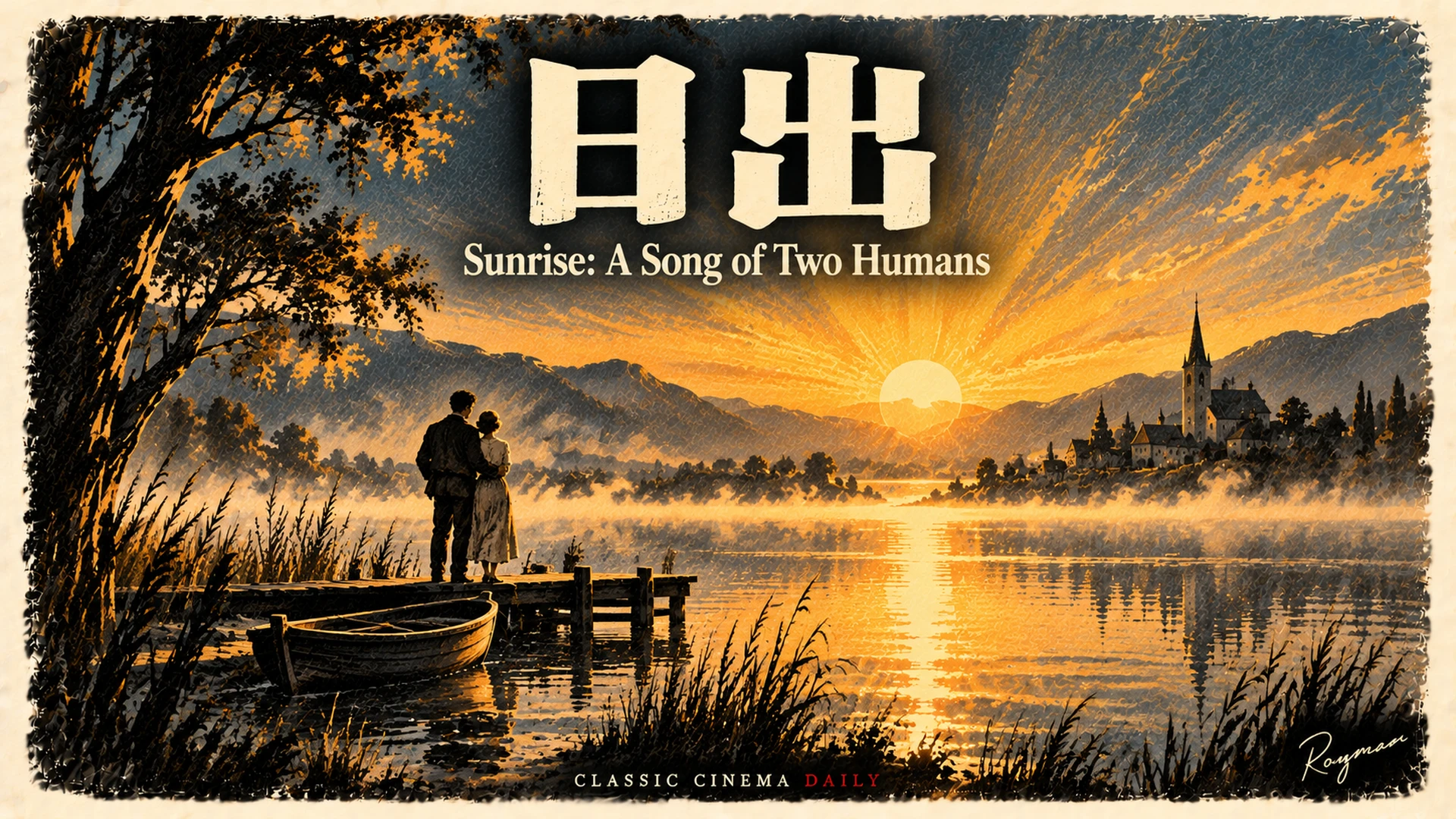
A farmer is talked into drowning his wife by a woman visiting from the city. At daybreak he takes his wife into town instead, and across a tram, a barbershop, an amusement park and a church, sees her again. Murnau's moving camera and synchronised score turn murderous intent into the quietest wavering in cinema.
01Why this film today
Before it arrived, this archive held only five silents, four of them from the 1920s, and not one about an ordinary married couple. Sunrise fills that gap — and picks up the question The Piano leaves behind: what do you do with someone who cannot say what they want?
02Film details
- Chinese title
- 日出
- English title
- Sunrise: A Song of Two Humans
- Director
- F. W. Murnau / F. W. 茂瑙
- Year
- 1927
- Country
- United States / 美国
- Language
- Silent film (English intertitles)
- Genre
- Romance / Drama / Silent film / 爱情 / 剧情 / 默片
- Runtime
- 95 min
03About the film
湖边有个小农场,农夫和妻子住在那儿,养鸡、种地、带孩子。夏天,一个从城里来度假的女人住进村里,她比这里所有人都更懂得怎么说话。她教他划船到湖心,教他把船弄翻,教他怎么让这件事看上去像一场意外。他答应了。 第二天一早,他跟妻子说要进城办事,两个人上了船。湖很大,雾很重,桨在水里划了很久。
04Why it is a classic
At the first Academy Awards in 1929 the Academy handed out two top prizes: Outstanding Picture and Unique and Artistic Picture. Sunrise took the latter — a category that existed only once. Janet Gaynor won the first Best Actress award, granted for her work across Seventh Heaven, Sunrise and Street Angel combined; Charles Rosher and Karl Struss won Best Cinematography. Its standing has only hardened: eleventh on the 2022 Sight & Sound critics' poll, thirty-third on the directors' poll, eighty-second on AFI's tenth-anniversary list, and added to the National Film Registry in 1989. Technically it was a gamble. Murnau brought German Expressionist staging to Fox, which gave him enormous stylised sets — the city street alone reportedly cost over $200,000 to build and was reused in later Fox productions. Much of the exterior work was shot at Lake Arrowhead. He chose the new Movietone sound-on-film system and used it for a synchronised score and effects rather than dialogue: in 1927, when sound was still a novelty act, he made the environment speak and kept his people silent.
05What to notice
全片没有一句对白,却用了当时刚出现的 Movietone 声片系统,配了完整的同步配乐与音效,是最早带同步音轨的长片之一。
剧本由 Carl Mayer 改编自 Hermann Sudermann 1917 年的短篇〈The Excursion to Tilsit〉。三个主角在片中都没有名字,茂瑙用这个办法让他们变成任何一种婚姻。
城市场景是巨型布景,那条街据称造价超过二十万美元,后来被福克斯多部影片复用,包括 John Ford 的《四子》(1928)。外景大量在加州 Lake Arrowhead 拍摄。
摄影 Charles Rosher 与 Karl Struss 的跟踪镜头是影片最常被引用的技术成就;城市场景里还大量使用强制透视,前景是正常尺寸的人,远景是缩小的布景与人。
第一届奥斯卡的「独特与艺术影片」奖只颁过这一届,《日出》是唯一的得主。同届 Janet Gaynor 的首座影后由三部影片合并授予,这在奥斯卡史上也是孤例。
06Before you watch
默片,95 分钟,没有对白,只有少量英文字幕卡。茂瑙刻意让字幕出现得很少,大部分情节靠动作和调度讲完——前二十分钟你会不习惯,之后会发现不需要。 版本问题值得注意:1927 年原版是 Hugo Riesenfeld 的同步音轨,后来的修复版常换新配乐,不同版本的观感差别不小。看你手上是哪一版,不必执着于「原版」。 进城之后节奏突然变快,游乐场和理发店那两段是全片最松、也最炫技的地方。如果只打算看一部默片,这部比表现主义那一批更容易进。
07In one line
Murder and love share the same face; only a night stands between them.