4 min
Late Spring
晚春
1949
Yasujirō Ozu
Japan · Drama / Family drama · 108 min
The film in which Ozu's style fully arrived. In a house in Kamakura a widowed professor and his twenty-seven-year-old daughter have lived for years; the relatives start pressing her to marry, and she keeps saying no. Not one argument in the whole film.
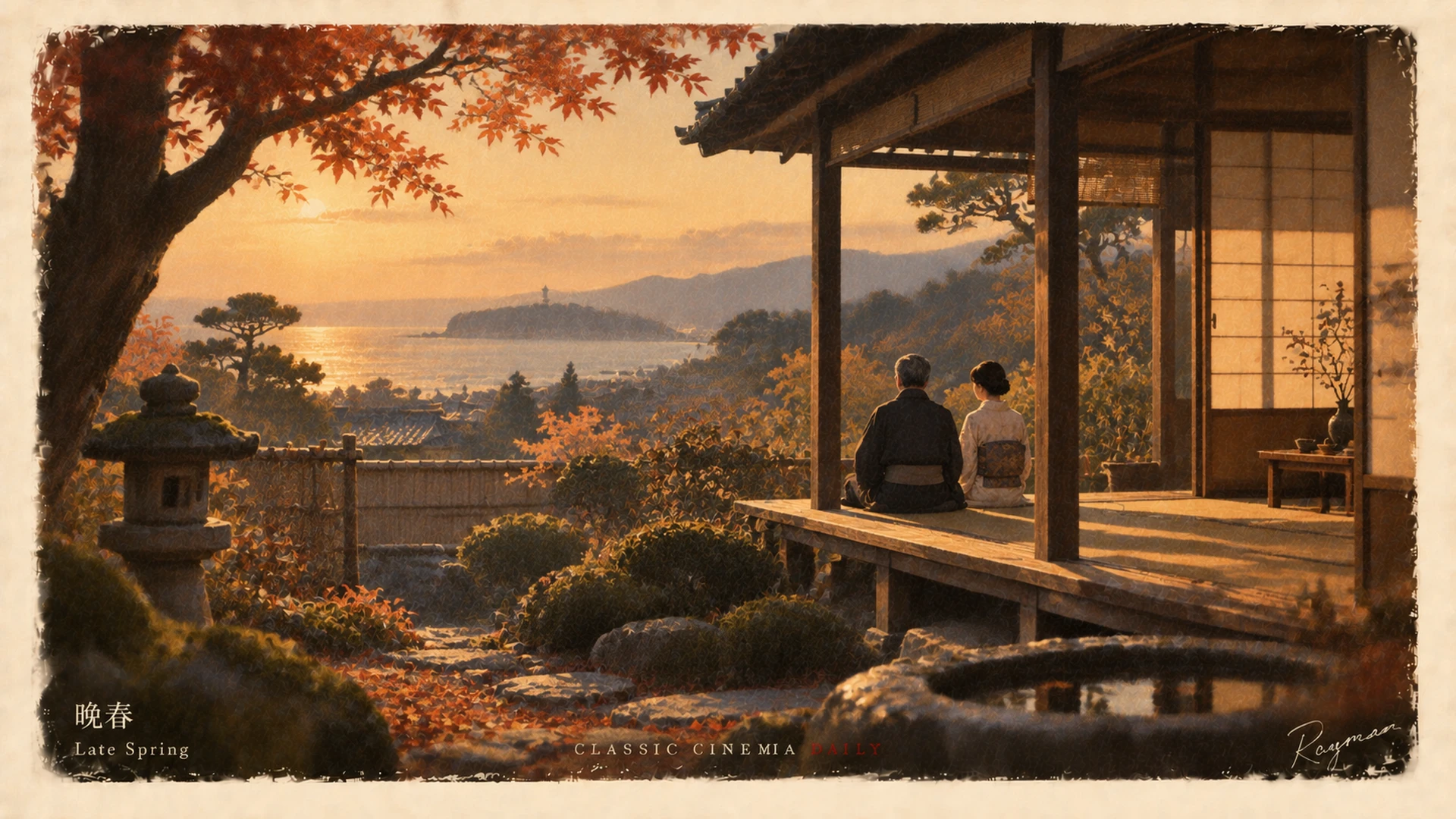
01Why this film today
The other film today is about a man being chased. This one is about a woman who will not move an inch.
Frost's Descent has just passed and the days are shortening fast. Ozu's rhythm suits the season: people sit in a room and talk, then they stand up, and the room is empty.
The link to the other film is the same situation — a performance already under way, and someone in the audience who suddenly recognises themselves in it. Hitchcock puts it under the spotlight of a music hall; Ozu puts it in the dark of a Noh theatre. On stage the play continues; the father smiles at the woman beside him; his daughter says nothing, and the camera stays on her face.
02Film details
- Chinese title
- 晚春
- English title
- Late Spring
- Director
- Yasujirō Ozu / 小津安二郎
- Year
- 1949
- Country
- Japan / 日本
- Language
- Japanese
- Genre
- Drama / Family drama / 剧情 / 家庭
- Runtime
- 108 min
03About the film
开场是一场茶会。
镰仓的一间屋子里,一位丧偶的大学教授和二十七岁的女儿住在一起。女儿管做饭、管洗衣、管父亲的一切,管了很多年,管得理所当然。
亲戚们开始催她出嫁。她不吵也不闹,只是每一次都把话题轻轻绕开。
父亲的老友从京都来,刚刚再婚。她当面说了一句很不客气的话——那句话说完,屋里安静了一下。
04Why it is a classic
Late Spring is usually taken as the first film of Ozu's late period. It opened in Japan on 19 September 1949 to a largely enthusiastic press; the following year it topped the Kinema Junpo poll as the best Japanese film of 1949 — the fifth Ozu film to do so, and the first of his postwar ones. That year it also took four Mainichi Film Awards: best film, director, screenplay and actress.
In the 2012 Sight & Sound critics' poll it placed 15th. The BBC's 2018 poll of 209 critics from 43 countries put it 53rd among the greatest foreign-language films. Rotten Tomatoes: 100% from 26 reviews. Leonard Maltin gave it four stars, calling it a work that rivals Tokyo Story as the director's masterpiece. Akira Kurosawa included it in the personal top 100 he published in 1999.
And the remarkable thing is that not one scene in it is an argument.
05What to notice
关键的一场戏在能剧场,而且什么都没发生。 父亲对邻座的寡妇笑了一下,坐在旁边的女儿看见了。小津没有给台词,没有给特写切换,只把镜头留在她脸上——观众自己就明白了。整部电影的情感转折都装在这个笑容和这张脸之间。
结尾是一个苹果。 女儿出嫁,父亲回到空屋子,坐下来削一个苹果。果皮一圈圈连成一条长带,最后落在地上,他慢慢低下头。全片到这里结束:没有一句解释,没有一个回忆镜头,没有音乐替观众说话。
原节子的六部之始。 这是她与小津合作六部中的第一部,也是所谓「纪子三部曲」的开端——后面是《麦秋》(1951) 和《东京物语》(1953)。三个纪子姓氏不同、互不相干,只共享一个身份:战后日本待嫁的女人。
剧本要过占领军的审查。 影片的写作和拍摄都在盟军占领日本期间,受占领当局的审查约束。核心情节是女主角通过一次相亲就答应嫁给一个只见过一面的男人——这件事本身就踩在当时的敏感点上。研究者根据占领军留下的审查档案指出,公映后日本评论界总体热情,但也有报纸抱怨「节奏不是这个时代的感觉」。
小津本人一辈子没结婚,一直和母亲住。 他 1946 年 2 月从战场回到日本,直接搬回母亲那里;1963 年 12 月 12 日去世,那天正是他六十岁生日。知道这件事再看这部片子会多出一层东西——但片子本身一个字都没提。
1972 年 7 月,New Yorker Films 把它带进北美院线。 这家发行商也是本站另外三部片子的引进方:《雾中风景》(1990)、《地下》(1997)、《木乃伊之夜》(1975)。
06Before you watch
108 分钟,黑白,日语。
节奏慢,而且是有意的慢——小津把摄影机固定住,让演员把话说完,不切。第一次看小津,建议不要一边做别的事:这部片子的信息全在停顿里,不在台词里。谁坐在榻榻米上、谁坐在西式椅子上、谁先动筷子,都在标记一个人和传统的距离。
要有心理准备:它不会给你一个痛快的结局。最后一个镜头结束,片子就完了,没有人出来解释刚才发生了什么。
看完如果想知道「后来呢」,可以接着看《麦秋》和《东京物语》——那两部回答的正是这个问题。
07In one line
Nobody in this film does anything wrong, and everybody gets hurt. In an Ozu film, that is the cruellest kind of tragedy there is.