4 min
A Touch of Zen
侠女
1971
King Hu
Taiwan, China / Hong Kong, China · Wuxia / Action / Drama · 180 min
Under the eunuch Wei Zhongxian's grip on the Ming court, Yang Huizhen, daughter of a murdered official, hides in a derelict country manor and crosses paths with Gu Shengzhai, a poor scholar who wants only to pass the examinations. King Hu pushes the wuxia film to the border where Zen contemplation meets pure cinematic form, using bamboo groves, mist and Peking-opera percussion.
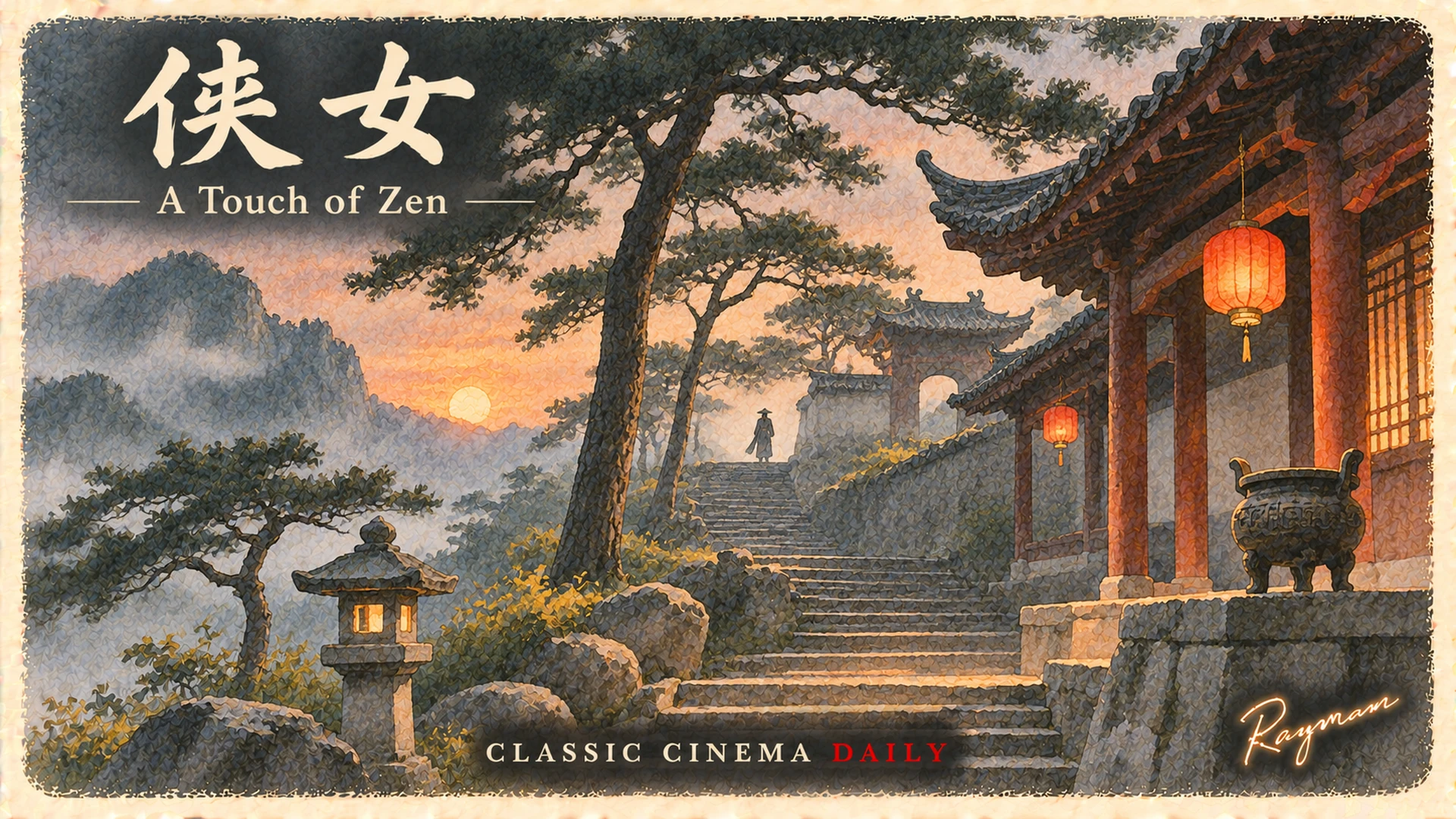
01Why this film today
There is no anniversary worth forcing onto 12 November. What there is: the start of winter just passed (7 November 2026 in the Chinese calendar), short days and long nights, which suits a long film willing to slow down. A Touch of Zen fills a conspicuous hole in the archive. Of the 88 films already here there are samurai, westerns, film noir, musicals, but no wuxia at all, and wuxia is the most distinctive contribution Chinese-language cinema has made to world genre film. It also stretches the 1970s from eleven entries, and it brings a rhythm found nowhere else in the collection: King Hu refuses to hurry, spending a full hour letting a scholar grow suspicious inside a ruined country manor.
02Film details
- Chinese title
- 侠女
- English title
- A Touch of Zen
- Director
- King Hu / 胡金铨
- Year
- 1971
- Country
- Taiwan, China / Hong Kong, China / 中国台湾 / 中国香港
- Language
- Mandarin
- Genre
- Wuxia / Action / Drama / 武侠 / 动作 / 剧情
- Runtime
- 180 min
03About the film
明朝,宦官魏忠贤把持朝政。偏僻山村的一座废宅里,穷书生顾省斋靠卖画糊口,母亲日日催他赴考,他却只肯在镇上闲晃。某日,一个自称欧阳年的外乡人上门求画,出手阔绰,问东问西;紧接着,一位老妇带着女儿搬进隔壁,那女儿沉默寡言,夜里却有陌生人翻墙进出。顾省斋以为自己撞上了鬼。他猜的方向大体不错,只是猜错了鬼是谁。
04Why it is a classic
In 1975 it won the Technical Grand Prize at the 28th Cannes Film Festival and was nominated for the Palme d'Or, making it the second Chinese-language film ever to win at Cannes and the first wuxia film to win at a major international festival. Adapted from Pu Songling's short tale of the same name in Strange Tales from a Chinese Studio, it expands a story of barely a thousand characters into a three-hour epic: the first half is suspicion and character, the second is pursuit and combat. The Hong Kong Film Awards Association placed it ninth on its list of the 100 best Chinese-language films, and the 2011 Golden Horse exhibition of the 100 greatest Chinese-language films put it fifteenth. Writing for Criterion, David Bordwell noted that the story is simple but the treatment complex, that no Shaw Brothers film would delay basic exposition so cunningly or stage a hero's swordfight from a minor character's point of view; Tony Rayns called it a sentient work of art from King Hu's singular mind.
05What to notice
拍摄与上映都分两集:上集 1970 年 7 月在台湾公映,下集 1971 年 11 月;1971 年香港上映的是合并版,长 187 分钟;现行 4K 修复版为 180 分钟。本条目年份取 1971,即合并版面世之年。
徐枫饰杨慧贞、石隽饰顾省斋、乔宏饰禅宗高僧慧圆、白鹰饰假扮盲人的石问樵、田鹏饰东厂密探欧阳年。片中一批龙虎武师后来各自成名:洪金宝、成龙、林正英、陈会毅都在其中。
竹林剑斗是全片最著名的段落。胡金铨不用连续写实的打斗,而用省略式剪辑、视点切换与碎片化动作,让角色看上去能悬停空中、跃至不可能的高度、在半空中转向——这是对电影空间的重新建构,不是对动作的记录。
声音设计与剪辑同构:吴大江、罗明道把京剧锣鼓与环境中的静默交替使用,打击节奏给剑斗一种舞蹈般的身体感,深沉的弦乐则跟随禅僧出场,战斗因此被当作视觉音乐来处理。
胡金铨同时担任编剧与联合剪辑。他把原著里的志怪骨架换成了明代万历年间的政治迫害背景,让一个超自然故事落地为可考的历史处境。
06Before you watch
180 分钟,普通话对白。前一半几乎不打,是废宅里的疑云、母子日常与人物关系的慢铺;后半才进入连场追捕与对决。建议一次看完,不要分两晚——胡金铨的节奏是靠累积攒出来的,中途断开会丢掉那种「等一件事发生」的张力。画面是彩色的,但雾气、暗夜与竹林把色彩压得很克制,修复版的层次比旧拷贝清楚很多,值得找好版本。片中有禅宗意味的段落,不必预先做功课,跟着看即可。
07In one line
It lets you imagine ghosts in a ruined manor for a full hour before showing you that the real martial art was cutting movement into music.