6 min
M
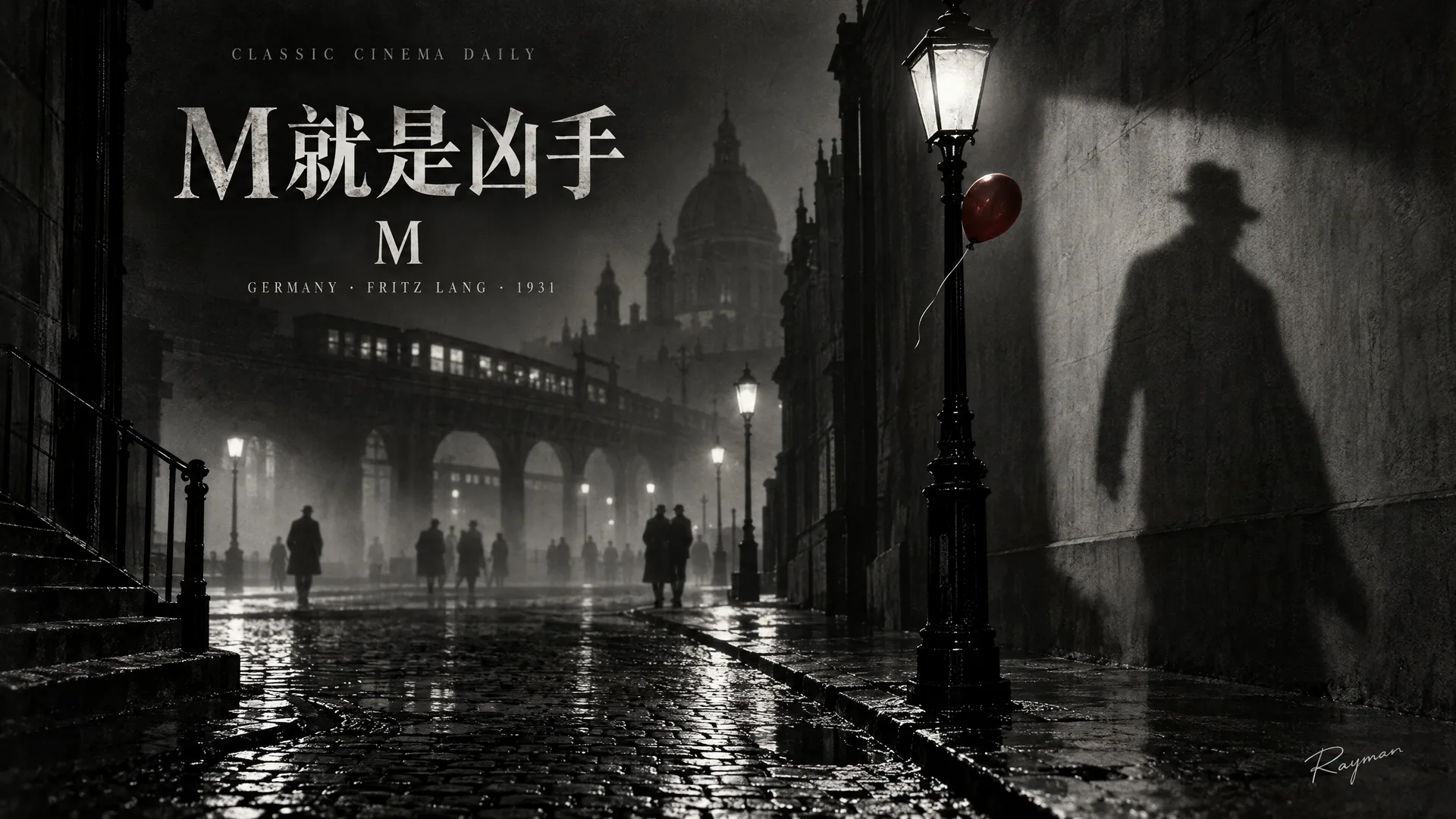
M 就是凶手
1931
Fritz Lang
Germany · Thriller / Crime / Drama · 117 min
A German city hunts a child murderer, the police and the underworld each casting their own net. Fritz Lang's first sound film rewrote the grammar of film sound with a single whistle heard off-screen.
01Why this film today
Cold Dew passed three days ago (the term turned on 8 October at 14:29), and the nights have turned with it. Tonight calls for a cold film — a city reshaped by fear of a man no one can see.
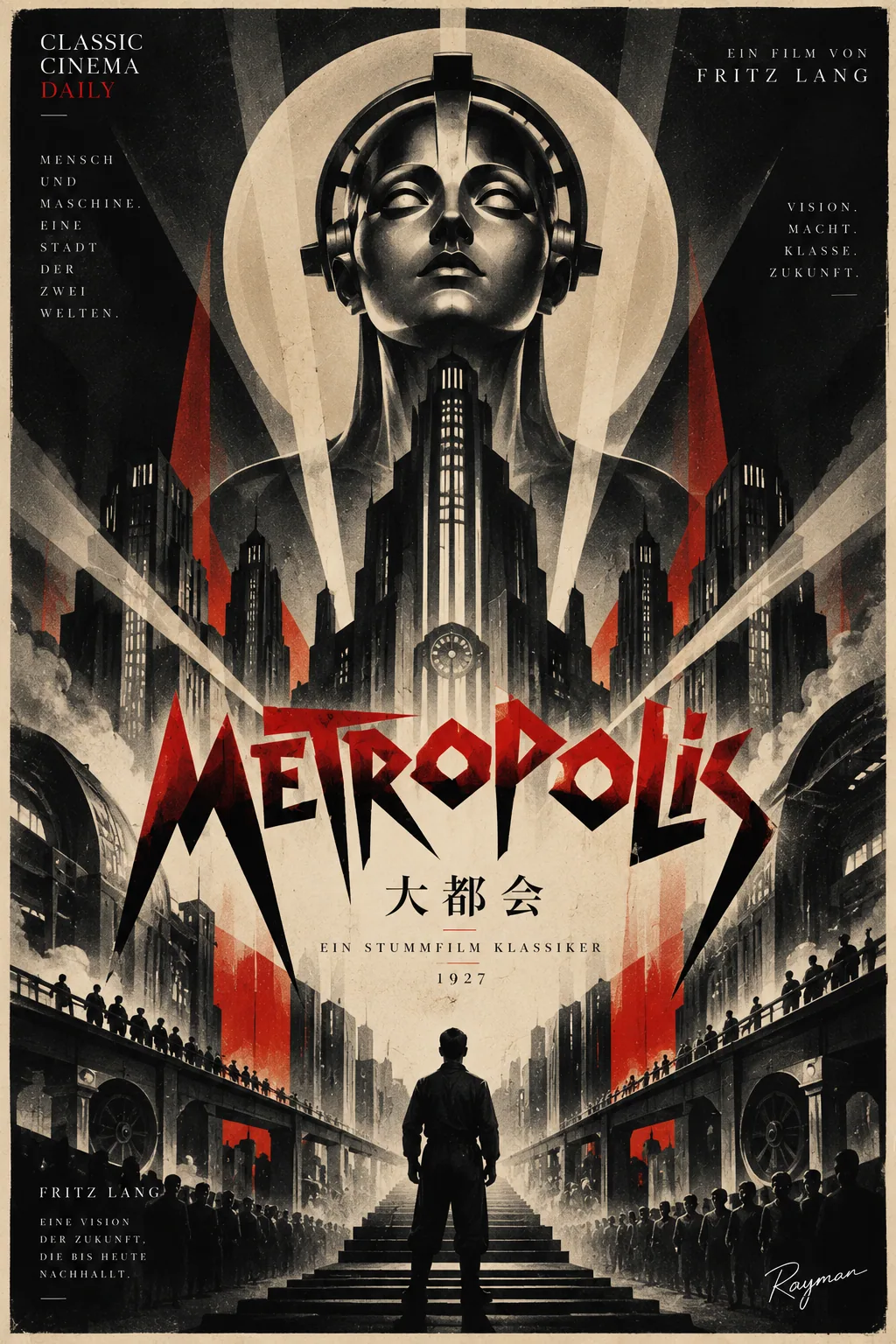
There is an in-house reason too: this archive already holds Lang's Metropolis (1927), that vast vertical silent city, and it has always lacked its counterweight. M is that counterweight. Four years after Metropolis, Lang delivered his first sound film, moving the camera from the tower tops down to the street — and he did it not with spectacle but with a whistle. It also fills the archive's thinnest decade: the 1930s held only Modern Times (1936) until now.
What it does with tonight's second film only becomes clear once both are seen: one invents cinema's rules, the other smashes every one of them.
02Film details
- Chinese title
- M 就是凶手
- English title
- M
- Director
- Fritz Lang / 弗里茨·朗
- Year
- 1931
- Country
- Germany / 德国
- Language
- German
- Genre
- Thriller / Crime / Drama / 惊悚 / 犯罪 / 剧情
- Runtime
- 117 min
03About the film
1931 年的柏林。一名连环杀童犯在活动,全城恐慌,报纸天天头条。
警察搜遍出租屋、地铁站与妓院,指纹、笔录、线人撒了一整张网,一无所获。受害孩子的母亲们站在街口,只能互相搀扶。
同样的压力也压在另一群人身上——持续的搜捕搅黄了黑道的生意。于是贼王、老鸨、销赃者与扒手头目开了一场会,做出一个决定:警察抓不到的人,我们来抓。全城的乞丐、小贩与擦鞋童都被动员成一张监视网,目标只有一个:那个还没有名字的人。
影片几乎不拍犯罪本身。它拍的是一座城市如何在恐惧里改变形状。
(这里不再往下说。)
04Why it is a classic
1931: a film with almost no dialogue that reinvented film sound
M premiered at Berlin's UFA Palast am Zoo on 11 May 1931. 117 minutes (original German version), German, produced by Nero-Film. Directed by Fritz Lang, written by Lang with his then-wife Thea von Harbou.
Lang had resisted sound. M — his first talking picture — answered not by letting cinema speak but by letting sound arrive before the image:
- Off-screen sound as narrative: the whistle (Grieg's "In the Hall of the Mountain King" from the Peer Gynt suite) is heard before the killer is seen, and the audience recognises him before the police do — the film's most suspenseful passages run on sound, not image;
- subjective sound: in the sequence where mothers wait for news, a police telephone bell is cut against the rhythm of a knife on a chopping board — sound becomes a state of mind;
- counterpoint, not sync: children's rhymes, the whistle and city noise chase one another; sound is used as structure, not accompaniment.
Two manhunts, one shoulder
The film splits its narrative in two. The police line plays like a procedure picture — conference rooms, filing cabinets, fingerprint close-ups, much of it on location with real documents. The underworld line moves to an entirely different, gangster-film rhythm. The two are cut in parallel, tightening until they meet on a single shoulder.
The violence it does not show
M almost never shows the crime itself. Its worst moments are off-frame: a balloon rising, an empty plate, a mother's hand. Lang leaves the fear for the audience to finish — which is why the film still works ninety-five years later.
Peter Lorre's first major role
Round-faced, flat-nosed, with eyes where innocence and cruelty coexist, his Hans Beckert delivers the monologue at the film's improvised tribunal exactly on the seam between silent-era gesture and sound-era voice: gestures first, then words, like a man only just learning to speak.
Before the turn
Shot two years before Hitler came to power, drawn loosely from the Düsseldorf child murderer Peter Kürten (the film deliberately never names the city), it has been reread ever since as a warning about a society so frightened that it hands judgement to another kind of violence. Critics trace the entire serial-killer genre — from The Silence of the Lambs (1991) through Seven (1995) to Zodiac (2007) — back to this point.
05What to notice
那支口哨是谁吹的。 贯穿全片的〈In the Hall of the Mountain King〉,彼得·洛雷本人不会吹口哨——银幕上的哨声由朗亲自代吹。这是电影史上有数的「导演亲手制作的声音」。
「M」是怎么写上去的。 全城监视网锁定了吹口哨的人后,一个卖气球的小贩在掌心写下「M」,借着推销气球的机会拍在凶手肩上。那组缓缓升起的气球,是辨认,也是宣判。德语原名 M – Eine Stadt sucht einen Mörder,意为「一座城市在寻找一个杀人犯」。
开场那首童谣。 影片第一个镜头是孩子们围成圈,唱一首关于「黑衣人」的童谣,母亲立刻冲出来打断——恐惧已经渗进最日常的游戏里。而这首童谣与后来黑道搜捕的歌声,构成全片第一组声音的对位。
平行剪辑的两场会。 警察的会议与黑帮的会议被交叉剪接:一边是警长的地图与文件,一边是贼王们的烟与算计。这是后来所有「双线追捕」结构的母版,从《The French Connection》到《Heat》都受惠于此。
1931 年的实景柏林。 朗把摄影机拖上街头,大量场景在真实的街道、桥与地铁站拍摄,把表现主义的阴影搬进可指认的城市。Otto Wernicke 饰演的 Lohmann 警长后来又在朗的《The Testament of Dr. Mabuse》(1933)里出现一次。
06Before you watch
它是什么。 1931 年德国出品,117 分钟(原始德语版),德语,惊悚 / 犯罪。导演弗里茨·朗,Nero-Film 制作。
🔴 留给声音的耐心。 这是 1931 年的有声片,节奏与今天完全不同:前二十分钟是密集的信息(警察会议、黑帮会议、全城动员),几乎没有动作。但只要那支口哨第一次在画面之外响起,你就明白它在等什么。
版本。 流通版本长度不一,常见的有 117 分钟原始版与更短的删节版;条件允许就看 117 分钟那一版。
内容提示。 影片几乎不直接呈现针对儿童的暴力,但全程低压、克制而窒息。结尾那场戏不会给出爽快的判决——这是设计,不是遗漏。
一句话建议。 如果你以为「连环杀手片」是从好莱坞开始的,今晚可以往前倒六十年。
07In one line
One whistle off-screen, and a whole city turns its head. In Berlin, 1931, Fritz Lang's first sound film proved that the terrifying thing is never what you see — it is what you hear.