3 min
The Man Without a Past
没有过去的男人
2002
Aki Kaurismäki
Finland · Comedy-drama / Drama · 97 min
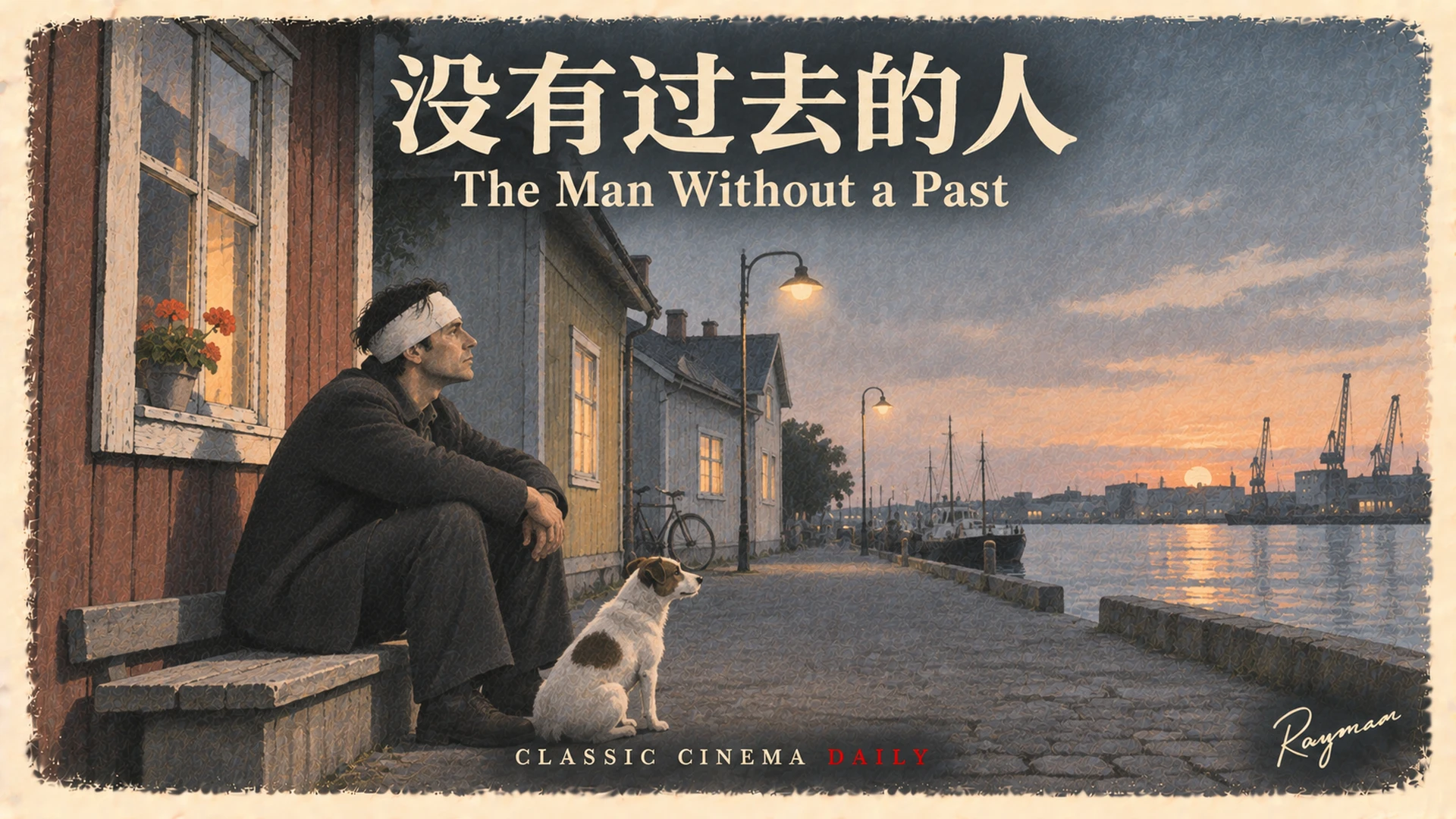
A man arriving in Helsinki is beaten into amnesia and taken in by outcasts living in harbour containers. Without a past, he begins again in the cracks of society. Aki Kaurismäki's Grand Prix winner at Cannes.
01Why this film today
It pairs with today's other film, The Vanishing: there someone vanishes from the world; here someone vanishes from his own memory. Halloween is about a thinning boundary, and Kaurismäki draws another kind — a man the system has written off as "nothing" who grows a new life for himself in the overlooked corners. This 2002 Finnish film won the Grand Prix at Cannes and remains the only Finnish film ever nominated for the Academy Award for Best Foreign Language Film.
02Film details
- Chinese title
- 没有过去的男人
- English title
- The Man Without a Past
- Director
- Aki Kaurismäki / 阿基·考里斯马基
- Year
- 2002
- Country
- Finland / 芬兰
- Language
- Finnish
- Genre
- Comedy-drama / Drama / 喜剧剧情 / 剧情
- Runtime
- 97 min
03About the film
一个男人乘夜车抵达赫尔辛基,在公园长椅上睡着后被三名劫匪打成重伤,醒来时失去了全部记忆——他连自己的名字都不记得。 他被港口一户住在废弃集装箱里的家庭发现,被救活、被收留。此后,港口那些被主流社会甩在身后的人一个接一个向他伸出手:帮他安顿、帮他在救世军找到工作、把并不体面却踏实的生活一点点拼回他身上。 影片几乎没有解释他的过去,也不追问他本来是谁。它把全部的力气都放在「一个人没有过去,能不能重新开始」这件事上。
04Why it is a classic
At Cannes in 2002 Kaurismäki took the Grand Prix (Grand Prize of the Jury); the following year it earned a nomination for Best Foreign Language Film at the 75th Academy Awards — the first and, to date, the only such nomination for a Finnish film. It is the second part of his Finland trilogy (after Drifting Clouds, 1996; before Lights in the Dusk, 2006). Kaurismäki's signature is minimal, deadpan, yet warmly humane comedy: little dialogue, long pauses, old rock and tango on the soundtrack, and characters drawn from society's margins. What is unusual here is that he treats amnesia without either sentimentality or suspense, as a modern fable: when a man is stripped of every proof of who he was, he gains the freedom to choose who he will be.
05What to notice
考里斯马基「芬兰三部曲」第二部,前作《浮云》(1996)、续作《黄昏中的闪亮》(2006),三部都讲普通人在时代缝隙里的尊严。
2002 年戛纳评审团大奖;2003 年第 75 届奥斯卡最佳外语片提名——芬兰电影史上唯一一次获该奖提名。
片中港口的边缘人群由救世军(Salvation Army)串联,考里斯马基用他们替代了传统剧情里的「家人」,构成一种自发选择的亲情。
音乐是考里斯马基的招牌:老式摇滚、探戈与民谣,常常比台词更早说话;他常用一首老歌把一整段情绪一次性托住。
影片 97 分钟,节奏克制、对白极少,但笑点都藏在面无表情的台词和突如其来的停顿里——这是他被称为「冷面喜剧」的原因。
06Before you watch
97 分钟,芬兰语对白,中文字幕即可。 考里斯马基的电影需要一点耐心:对白少、停顿长,很多情绪不在台词里,而在人物不动声色的脸上和突然响起的旧歌里。如果你习惯靠密集信息推进,前二十分钟会觉得「怎么什么都没发生」——其实发生的是一个人正在被重新组装。 建议别把它当悬疑片看(它没有要解开的谜底),也别当苦情片看。它真正的礼物是结尾那种轻得发亮的东西:一个人可以没有过去,却依然完整地拥有此刻。
07In one line
Stripped of every proof of who he was, a man gains the freedom to choose who he will be.