3 min
Tokyo Story
东京物语
1953
Yasujirō Ozu
Japan · Drama / Family · 136 min
An aging couple travel from Onomichi to Tokyo to visit their grown children, only to find themselves in the way. Yasujirō Ozu films, with the calmest camera, the quiet widening gap between parents and children in a changing age.
01Why this film today
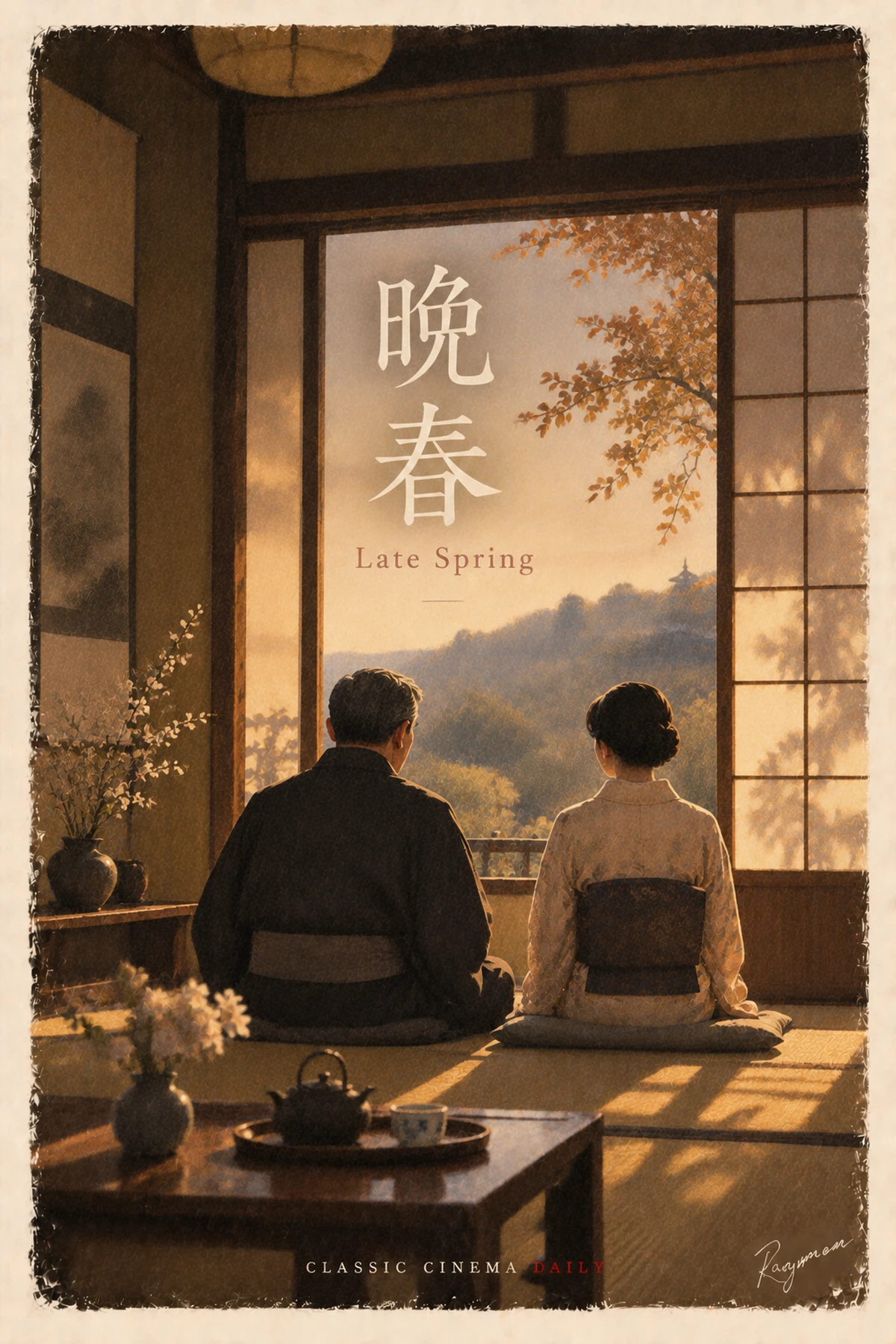
There is no anniversary to force onto 13 November, but deep into early winter the days are short and the nights long, which suits the slow, unhurried cinema of Ozu. Tokyo Story fills a conspicuous hole in the archive: we already have Ozu's Late Spring, but not his most widely acknowledged masterpiece. It keeps today's pick in 1950s Japan, and holds up a mirror — unhurried yet very clear — to every adult child who lives far from their parents and sees them too rarely.
02Film details
- Chinese title
- 东京物语
- English title
- Tokyo Story
- Director
- Yasujirō Ozu / 小津安二郎
- Year
- 1953
- Country
- Japan / 日本
- Language
- Japanese
- Genre
- Drama / Family / 剧情 / 家庭
- Runtime
- 136 min
03About the film
周吉和老伴 Tomi 住在濑户内海的尾道,儿女都在东京成家立业。老两口难得出门,决定去东京探望孩子。到了才发现,长子是忙碌的诊所医生,长女在美发店帮工,孙辈只惦记着电视。孩子们不是不孝,只是被自己的生活塞满,分给父母的只有勉强腾出的半天。老两口被客气地「安排」去温泉转一圈,反倒更像多余的人。而真正还把他们当亲人对待的,是早已守寡的二儿媳 Noriko——她本没有义务,却比亲生儿女更温柔。
04Why it is a classic
Tokyo Story has long stood near the top of every greatest-films-ever-made list. In the 2012 BFI Sight & Sound critics' poll it ranked first, and in the 2022 edition it still held third. Ozu sets the camera very low — close to eye level on a tatami mat — almost never moves it, and uses near-symmetrical static frames and well-timed empty shots (a morning lane, a passing train) to carry feeling. Without dramatic conflict of the usual kind, it renders the loosening of the postwar Japanese family and the silent gap between parents and grown children more lastingly than any sentimentality could. Its grammar later shaped a whole generation of directors, from Hirokazu Kore-eda to Hou Hsiao-hsien.
05What to notice
1953 年由松竹株式会社制作发行,黑白,片长 136 分钟;主演笠智众饰周吉、原节子饰守寡的二儿媳 Noriko、香川京子饰小女儿 Kyōko。
小津与长期搭档编剧野田高梧在茅崎的海滨旅馆反复打磨剧本,片中极低的机位、对称的静态构图与克制的剪辑,是二人一点点推敲出来的「小津调」。
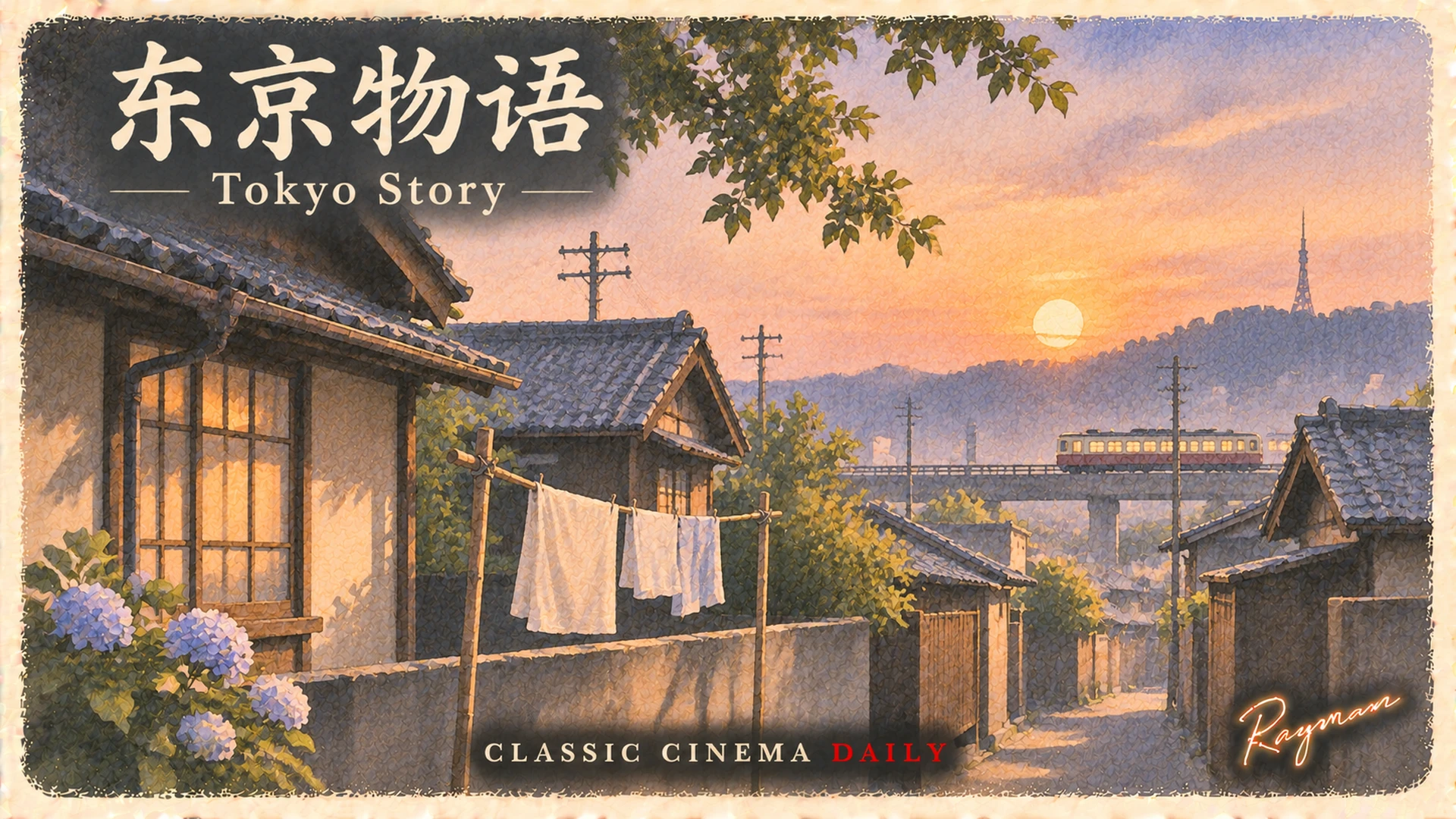
片中出现多处「空镜头」:尾道的街巷、驶过的火车、海浪。它们不直接推动情节,却承接了情绪的呼吸,这是小津区别于同代导演最显著的手法。
结尾周吉与 Noriko 在尾道的一段对话,被许多评论者视为全片情感的顶点:一句关于「子女终将后悔对父母不够好」的台词,把私人哀伤托到了普遍的人生命题。
本片在日本上映即获好评,但在英语世界长期不为大众熟知;直到 1970 年代字幕版流传与 BFI 等机构推介,才逐步被公认为世界电影经典。
06Before you watch
黑白,日语对白,136 分钟。节奏极慢,几乎没有传统意义上的「事件」:大量的静物、停顿与日常对话。建议不要在小屏幕上快进观看——小津的耐心本身就是内容,快进会丢掉那些「什么都没发生」的镜头里藏着的情绪。片中家庭聚餐、泡澡、乘火车等场景看着平淡,却是情绪累积的台阶。第一次看若觉得「太静」,不妨把它当作一次陪伴,而不是一次叙事。原节子与笠智众的表演极克制,情绪全在眼神与停顿里。
07In one line
It measures, in one family's visit, the quiet gap that a changing age opens between parents and children.